
Search intent optimization is about giving people exactly what they’re looking for when they hit search. Instead of just chasing keywords, you’re achieving search intent alignment with the user’s actual goal. This alignment is what tells Google your page is the best possible answer for that specific query.
Let’s break down how to audit your content and master search intent from the ground up.
What is search intent?
Search intent is the specific goal someone has when they type a query into Google; the why behind the search. Google’s entire business depends on solving the user’s problem as fast as possible, which means it ranks pages that satisfy that psychological driver rather than just matching terms.
While search relevance used to rely solely on keywords, Google now understands the context and intent behind every query. The search engine considers information beyond just words (such as your location) to show the best results.
For instance, if you search for “Giants” while in San Francisco, the results will likely relate to the baseball team rather than mythical creatures.
When you know what people are looking for, it becomes easier to create relevant and strategic content that meets their needs. This allows your brand to offer exactly what they want, helping you stand out from the competition and drive more traffic to your site.
Search intent is all about understanding the user’s information need and the information scent they follow through the SERP.
Is search intent still important in AI era?
Search intent is actually more critical now than it was a decade ago. As we move toward agentic commerce, AI agents will act as personal shoppers, browsing the web to execute purchases for users. If your transactional pages aren’t perfectly optimized for intent, these agents will simply skip your site in favor of a clearer, more authoritative competitor.
The rise of AI-driven search also means that surface-level content is no longer enough. Generative AI excels at answering simple informational queries directly on the search results page. To survive, your content must provide the deep, contextual value that AI models need to cite you as a trusted source for complex decision-making.
Optimizing for intent today is about preparing for a future where search is a conversation. Whether it’s a chatbot recommending a product or a voice assistant booking a service, the underlying driver remains the same: the user’s goal. Mastering intent now ensures your brand remains visible as search evolves from simple links to proactive AI-driven actions.
The four main types of search intent
To build an effective intent-based content planning system, you must organize queries into a clear intent taxonomy. Every search falls into one (or more) of four primary categories, each requiring a completely different approach to content creation, page structure, and conversion optimization.
| Intent type | Example queries | User expectation |
|---|---|---|
| Informational |
|
Clear definitions, step-by-step guides, or educational videos. |
| Navigational |
|
A direct path to a specific website, tool, or login portal. |
| Commercial |
|
Comparison charts, expert reviews, and “Top 10” lists. |
| Transactional |
|
A functional page to complete a purchase, sign-up, or download. |
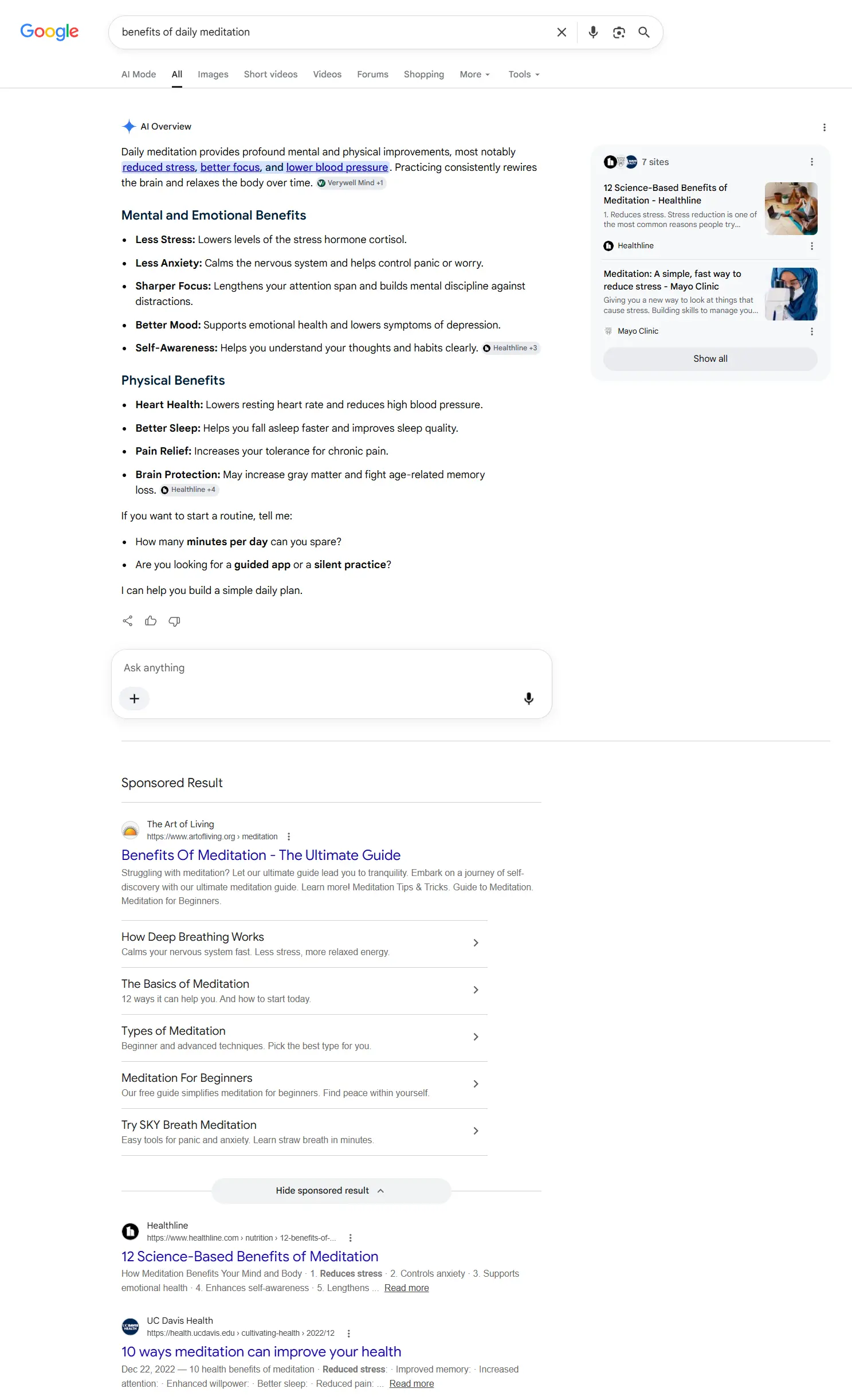
1. Informational intent
At the informational search intent. the user is looking for knowledge or a solution to a problem. These searches often start with “how to”, “what is”, or “why.” At this stage, your goal is to provide value and build trust without a hard sell.
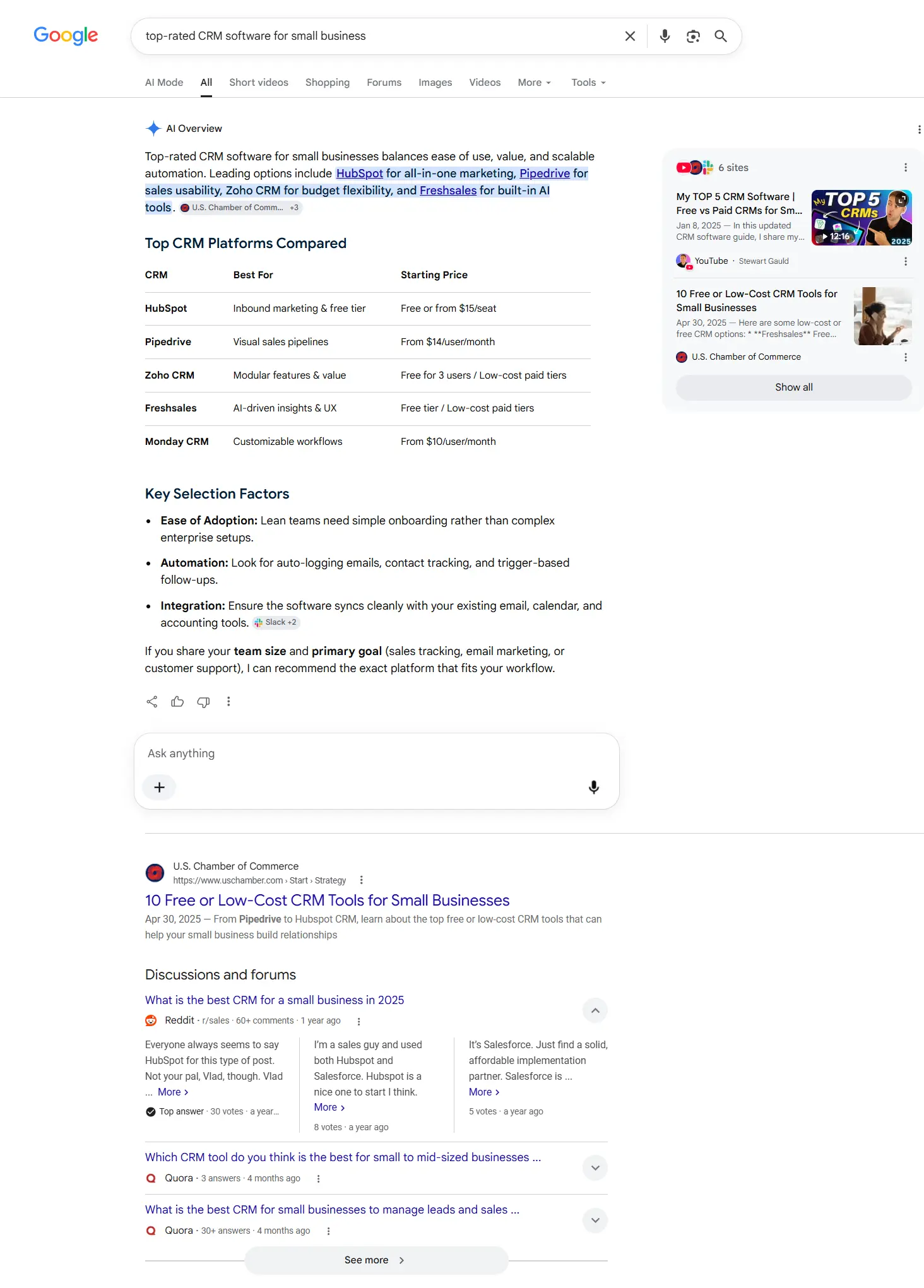
2. Commercial intent
This is where buyer intent keywords begin to appear. Users are in the research phase, comparing different solutions before making a final decision. Content like “Top 10” lists, “Product A vs Product B”, and deep-dive reviews are the winners here.
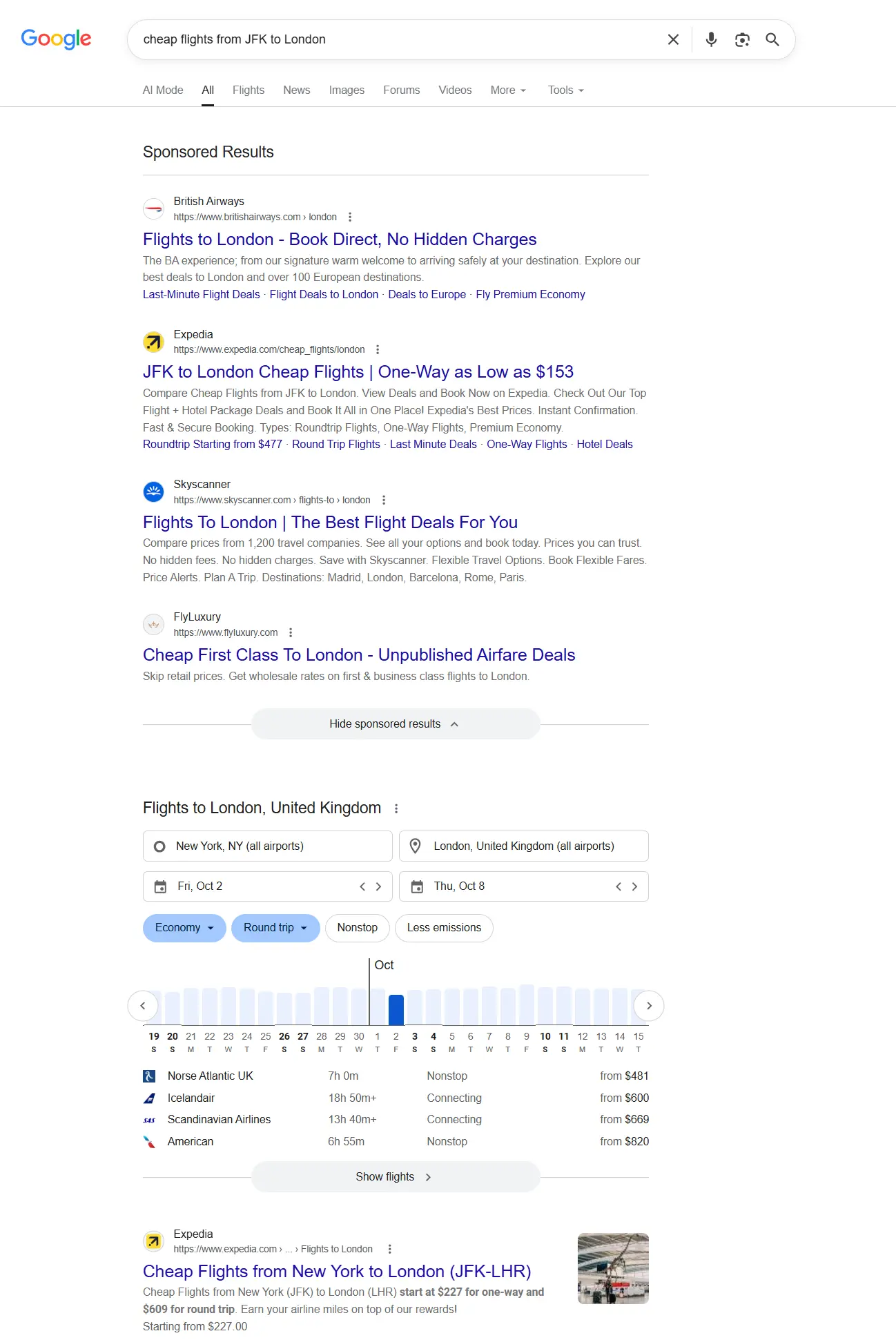
3. Transactional intent
With transactional intent SEO, the searcher is ready to take action. They have moved past the research and are now looking for the fastest way to buy, sign up, or download. These pages must be fast, secure, and optimized with clear Calls to Action (CTAs) to minimize friction.
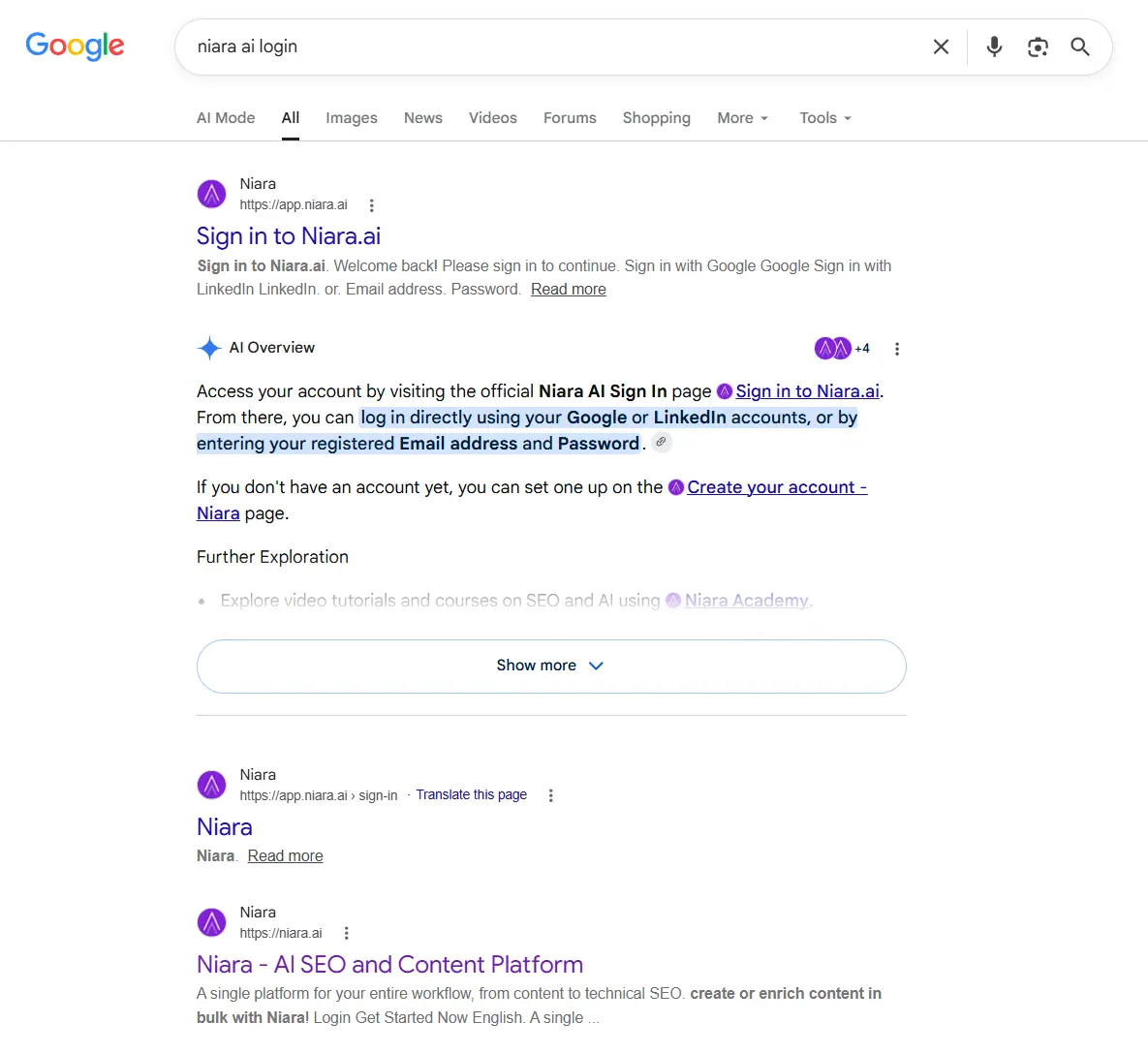
4. Navigational intent
In navigational intent SEO, the user already knows exactly where they want to go. They are using Google as a shortcut to reach a specific website or portal. Your brand should always rank #1 for its own navigational queries to ensure a seamless user experience.
5. Mixed and ambiguous search intent
Sometimes, a single keyword doesn’t have one clear goal. As an SEO professional, you must learn to navigate these two complex scenarios:
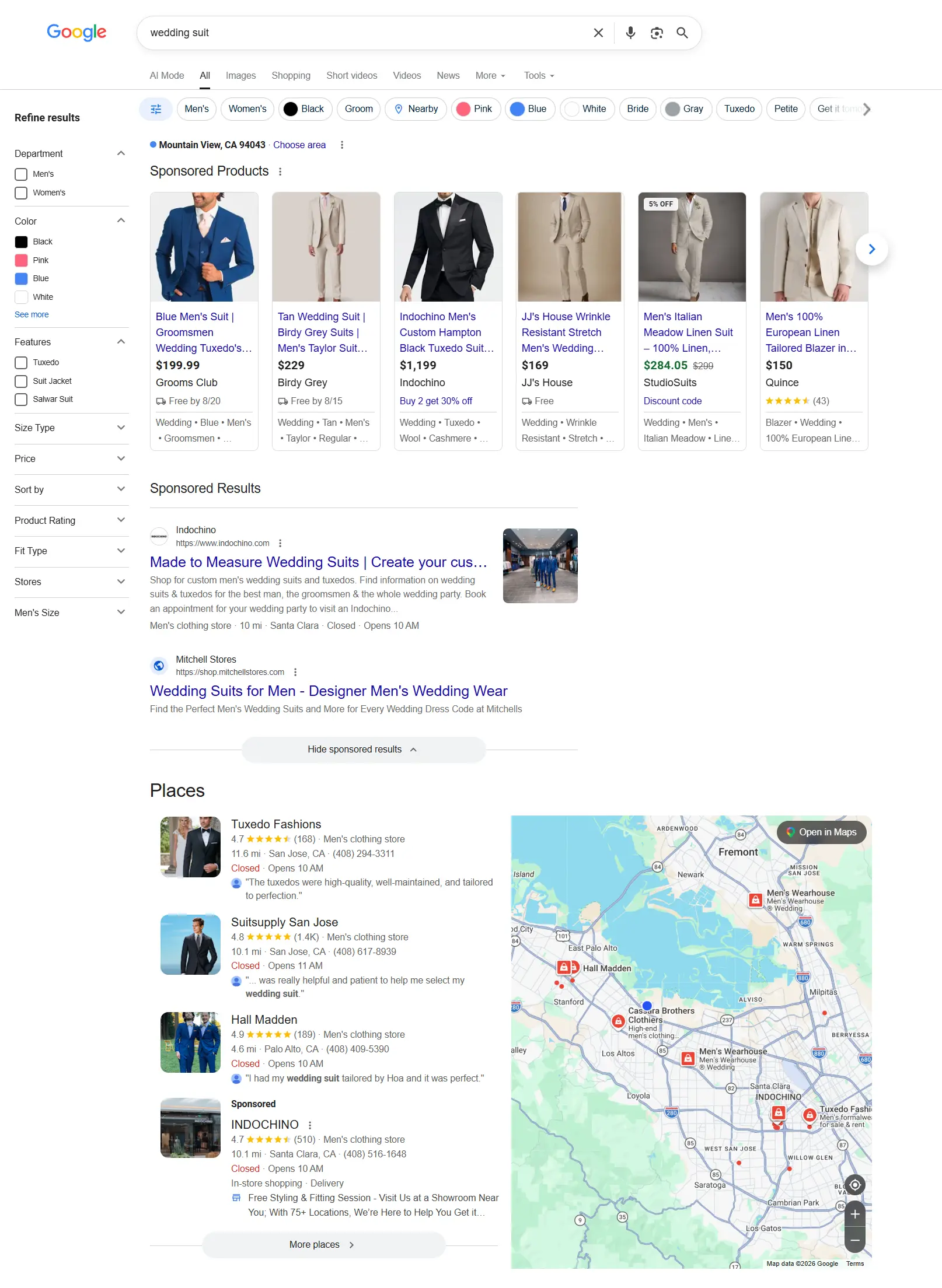
1. Consider mixed search intent: a single search can often have multiple goals at once. For example, someone searching for “wedding suit” might want to see style inspiration (informational) or buy one immediately (transactional). Google will often show a mix of blog posts and product grids to cover both bases. In these cases, you should optimize based on your business model.
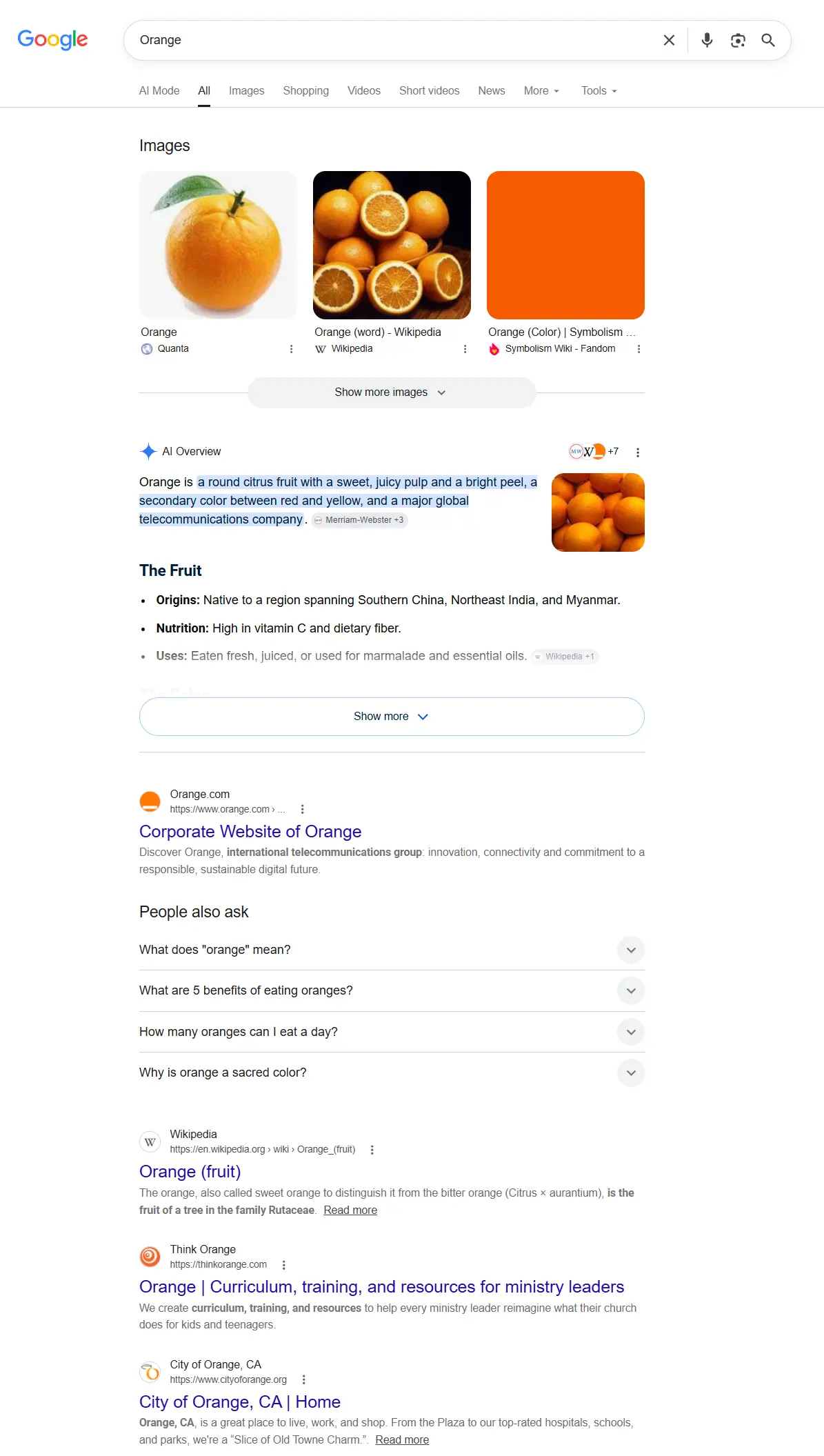
2. Consider ambiguous search intent: ambiguous searches happen when a term has completely different meanings for different people. A query like “Orange” could refer to the fruit, the color, or a global telecommunications company. When the search engine isn’t sure what the user wants, it provides a diverse set of results. Your best move is to double down on the specific context that matters to your target audience to ensure you attract the right traffic.
How to identify a keyword’s search intent using the SERP
The easiest way to decode search intent is to look at the SERP itself. Google has already done the hard work of analyzing billions of searches to see what users prefer and your job is now to observe the specific features Google displays, reverse-engineering the intended format for your content.
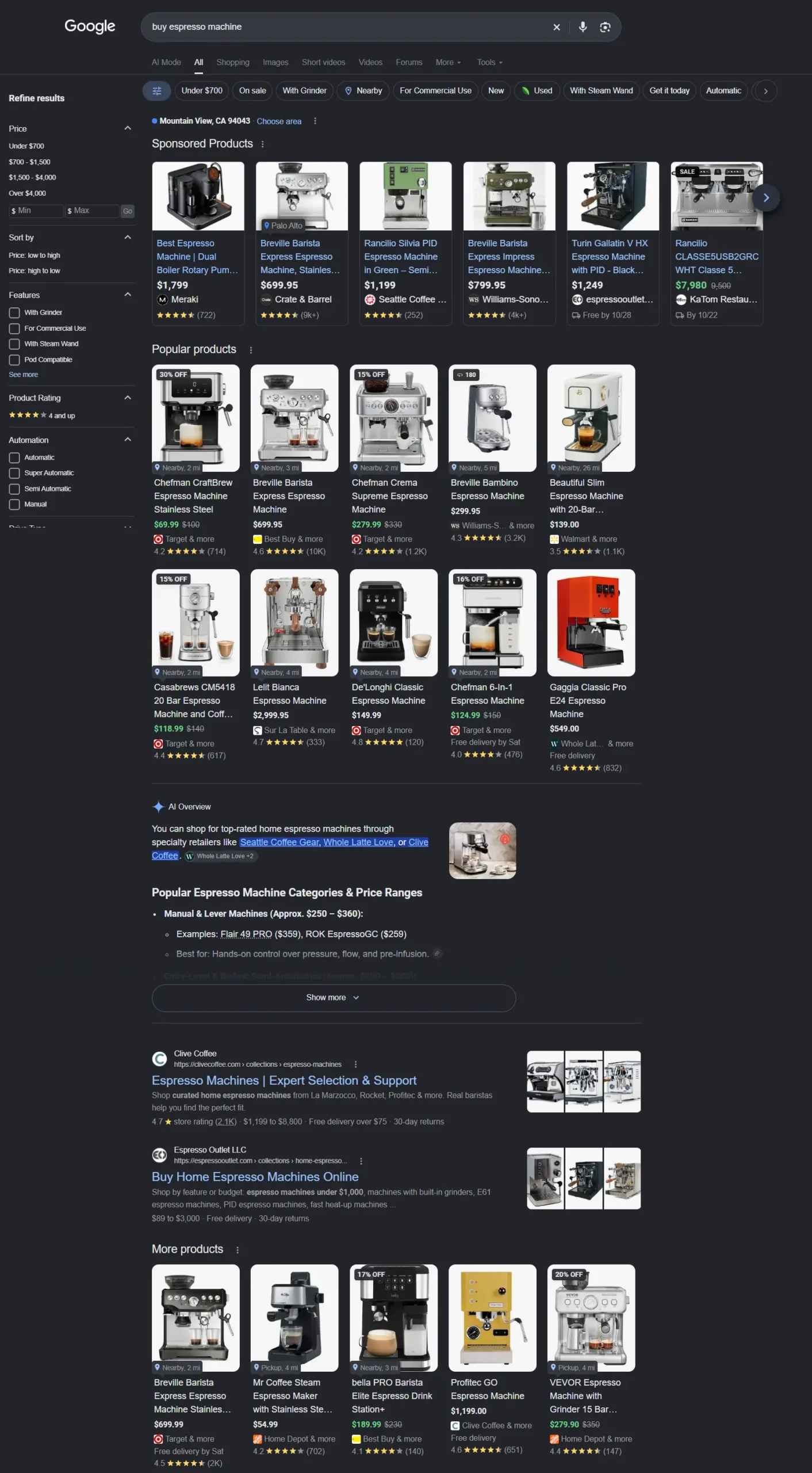
For example, we searched for “buy espresso machine”. The results were almost entirely focused on e-commerces, following the transactional intent. We saw sponsored product ads at the top and an AI Overview suggesting specific models to buy. Google even provided a sidebar to refine results by price, rating, and automation level.
- The lesson: to rank here, your page must be a high-performance product or category page. Instead of a long blog post, you should optimize product data and technical specs to feed into Google’s shopping filters and AI recommendations.
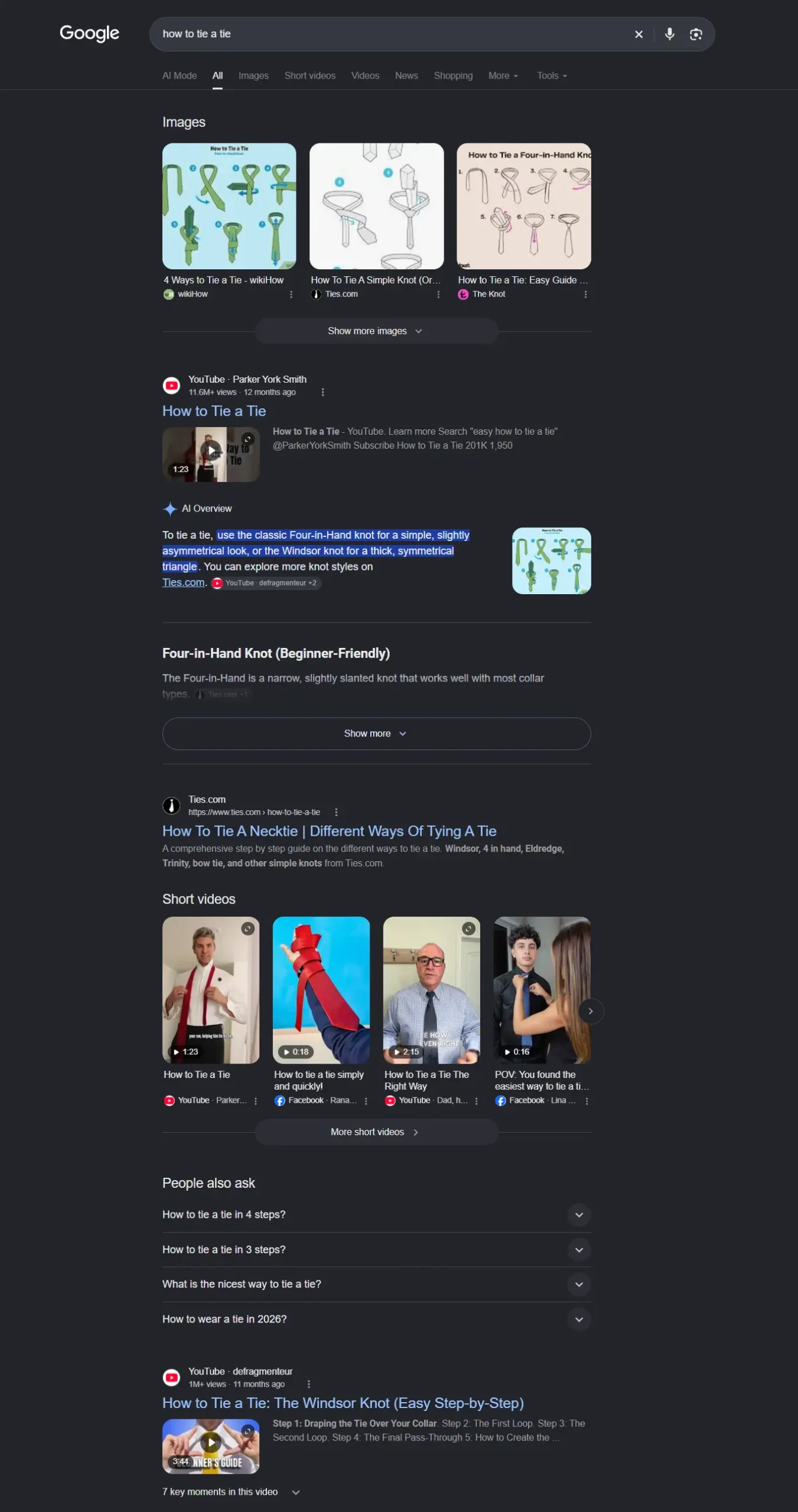
We also searched for “how to tie a tie”. For this query, Google prioritized visual learning above all else. Large image grids appeared even before the AI Overview summary. The page was filled with video carousels and People Also Ask sections that linked directly to specific timestamps in tutorials.
- The lesson: text is secondary for this intent. To capture the traffic, you need high-quality images and short-form videos. Your content must be easy to scan, as users are looking for a quick visual guide rather than a deep technical dive.
Search intent optimization: a 4 step-by-step framework
You can formalize your optimization process by implementing a repeatable workflow. This framework ensures you never waste time creating content that doesn’t align with what Google wants to rank. Follow these steps to audit and align your pages:
Step 1: analyze the SERP and competitors
Start your keyword research for intent by entering your target term into an incognito browser or a localized SERP simulator. Document the AI Overview and specific features like Shopping ads, Video carousels, or Featured Snippets. These elements are direct clues about what Google considers the most helpful format for that specific query.
Next, analyze at least the top 3 organic results to identify their content type. You need to determine if Google is prioritizing blog posts, individual product pages, or broad category pages. If every top result is a category page and you try to rank with a blog post, you will likely struggle to break into the top positions.
Finally, look for the content angle that these competitors are using. See if they are focusing on “best for beginners”, “2026 updated guides”, or “step-by-step” tutorials. Evaluating the three Cs of search intent (Content type, format, and angle) is the foundation of a successful search intent strategy.
Step 2: match the content format
Once you understand the goal, you must choose the best content formats for intent. If the top results are all listicles, it’s likely that users prefer this format for quick scanning and better experience. However, matching the format is only half the battle; you must also analyze the information density of those top pages.
You must analyze how the content looks and what it’s made of. You can use Niara’s Semantic Entity Mapper to identify the indispensable terms and concepts that must connect within your text.
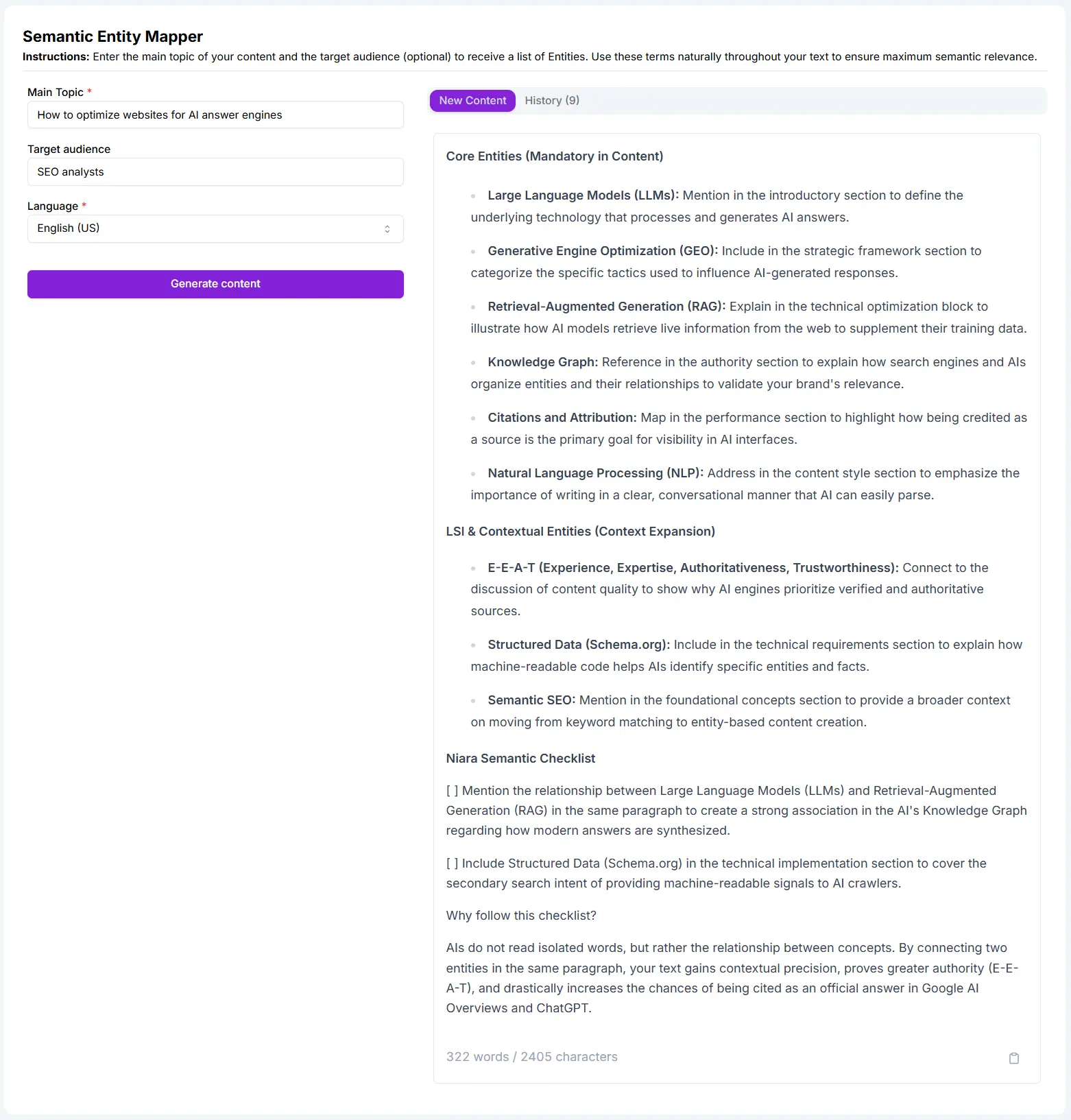
This process ensures your content has the semantic depth required to satisfy the user’s query and signals to Google that your page is a comprehensive authority on the topic.
Step 3: optimize metadata for the funnel
Your title tags and meta descriptions must speak directly to the user’s stage in the journey.By mapping intent to funnel, you increase CTR by promising the exact experience the searcher expects. Use these patterns as a guide for each intent:
| Intent type | Focus keywords | Title tag example |
|---|---|---|
| Informational | How to, Guide, Tips, What is | “How to Tie a Tie: A Step-by-Step Visual Guide” |
| Navigational | Login, Brand Name, Portal | “Niara Login |
| Commercial | Best, Review, Top, vs | “10 Best Espresso Machines of 2026: Expert Reviews” |
| Transactional | Buy, Price, Shipping, Order | “Buy Breville Espresso Machine |
Step 4: address downstream questions
Review the AI Overview and Google’s rich feature sections to understand what users ask after their initial search. Integrating these downstream questions into your content helps you capture more real estate. This approach satisfies the user’s entire journey without them needing to click back to the search results.
Conducting a content audit for intent in 4 steps
Search intent is not static; it shifts over time based on user behavior. A query that was informational three years ago might be commercial today. If your page has high impressions but low clicks (or high traffic but no conversions), you likely have an intent misalignment.
By applying modern search intent optimization techniques, you can use Niara to audit and optimize your site for the AI-driven search era (SEO, GEO, and AEO). Here is how to turn underperforming pages into ranking assets:
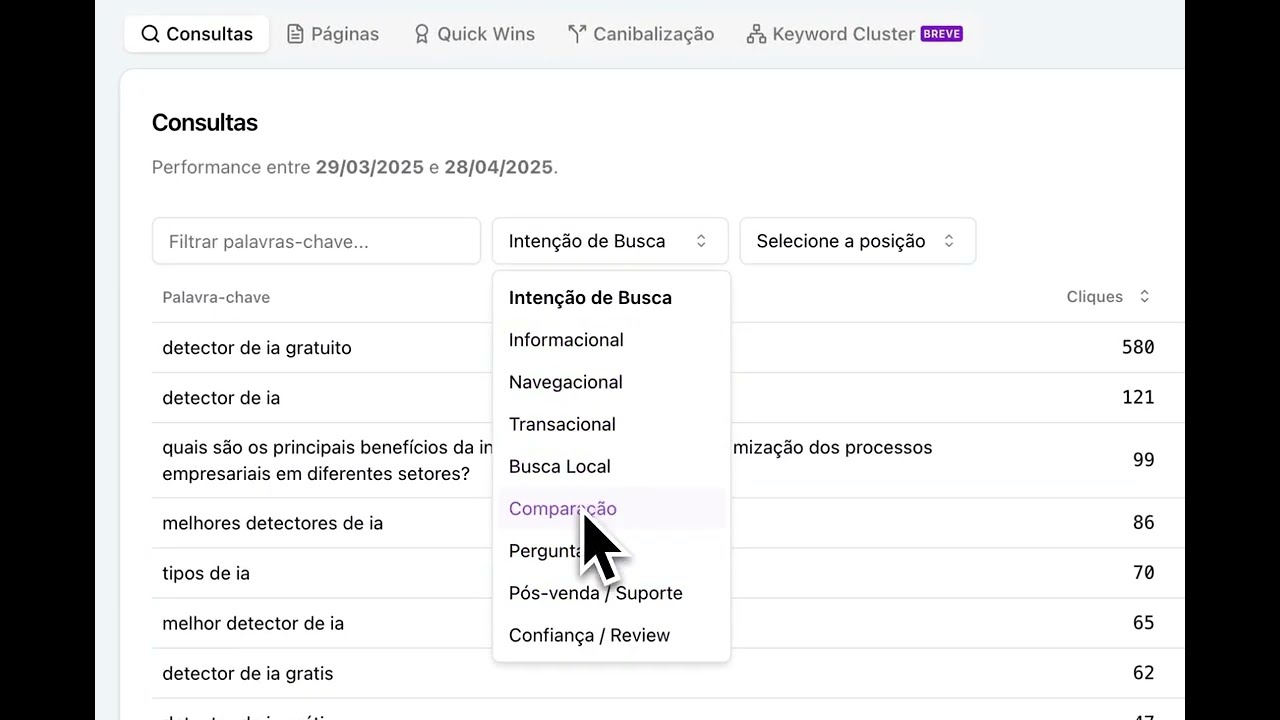
1. Audit with Search Analytics
Using Niara’s Search Analytics, you can filter your Google Search Console data by specific search intents. Niara identifies specific user intent signals and nuances like:
- Local search;
- Comparison;
- Questions;
- Post-purchase/Support;
- Trust/Reviews.
This allows you to pinpoint exactly where your content is failing to meet user expectations.
2. Deep dive with Conversational Analytics
If you notice a drop in performance, you can use ChatSEO with Conversational Analytics to investigate. Niara makes it easy to compare informational vs transactional intent without digging through spreadsheets. Try this prompts:
- Informational: “List the informational queries that dropped below position 10 in the last 30 days.”
- Commercial: “Show me commercial investigation keywords where my average position is between 5 and 15.”
- Transactional: “Identify transactional queries with high impressions but a CTR below 2%.”
We know that data security is a top priority for top marketers. Unlike generic AI tools, Niara guarantees that your shared data is never used by our platform or third-party tools for training purposes. You can optimize your strategy and scale your results with the peace of mind that your intellectual property and Search Console data remain exclusively yours.
3. Master AI Visibility with Google AI Mode Insights
To rank in AI-driven results, you need to understand fan-out queries — the related questions that AI models use to synthesize answers. Niara’s Google AI Mode Insights analyzes your content to see which of these queries you are answering and where the gaps are, ensuring your content is AI-ready.
Try Google AI Mode Insights for free!
4. Scalable creation with Content Workflow
Whether you need to pivot an informational blog post into a transactional landing page or create hundreds of product descriptions, Niara’s Content Workflow automates the process. It analyzes the current SERP and competitors to generate briefs and copy that match the required intent, format, and semantic density.
| Audit criteria | Intent signal check | Niara solution |
|---|---|---|
| Content type | Does the page type match the top 3 results? | Content Workflow (Generate the right template) |
| Content format | Does the structure mirror what Google rewards? | ChatSEO (Analyze competitor structures) |
| User engagement | Is the bounce rate high for the query type? | Search Analytics (Identify intent gaps) |
Can any software and AI tools optimize for search intent?
Yes, provided the software is built on semantic SEO principles rather than outdated keyword density metrics. At Niara, we bridge the gap between semantic SEO, GEO and intent by unifying these analyses into one workflow.
When you use features like our Content Workflow, the AI doesn’t just spit out generic text. It actively analyzes the live SERP for your target keyword, identifies the dominant search intent, and generates a comprehensive outline to produce high-quality, intent-driven content. It evaluates top organic competitors to ensure your content addresses the critical downstream questions necessary to satisfy both the user and the algorithm.
Furthermore, our AI Agents handle the heavy lifting of semantic clustering. Instead of manually grouping thousands of keywords into intent buckets in a spreadsheet, Niara instantly categorizes queries based on linguistic patterns and SERP feature presence.
This allows freelancers, small agencies, and enterprise teams to scale their intent-based optimization without sacrificing quality, while you focus on w’hat matters most: strategy, brand voice, and conversion optimization.

Making intent the core of your SEO strategy
As Google evolves into a generative response engine, your ability to align content with the user’s true goal will determine whether your brand remains visible or fades into the background.
Tools like Niara are designed to simplify the complex process of helping you understand the nuances of informational, navigational, commercial, and transactional queries, so you can build a sustainable strategy.
Whether you are using intent mapping templates or identifying semantic gaps with our entity mapper or pivoting your content to meet new SERP realities through Search Analytics, having Niara ensures you move faster than the competition.
Want to see it in action? Try Niara’s platform for free today!
