To provide accurate and relevant results, Google and other search engines prioritize user search intent, which is the specific goal behind a query.
Imagine you are planning a trip to Miami and search for “best beaches in Miami” on Google. You expect to find information about popular spots, the most beautiful locations, and tips on how to get there.
If Google showed results for flight tickets or car rentals, it wouldn’t be very helpful.
This is why search intent is vital. It connects the most relevant pages to what users actually need.
Below, we will walk you through the steps for creating and optimizing content so your website appears as a top result throughout every stage of your audience’s buying journey.
What is search intent in SEO?
Search intent is the “why” behind a search. It acts as a signal to Google to return the most useful pages based on what the user typed.
While search relevance used to rely solely on keywords, Google now understands the context and intent behind every query.
The search engine considers information beyond just words (such as your location) to show the best results. For instance, if you search for “Giants” while in San Francisco, the results will likely relate to the baseball team rather than mythical creatures.
When you know what people are looking for, it becomes easier to create relevant and strategic content that meets their needs. This allows your brand to offer exactly what they want, helping you stand out from the competition and drive more traffic to your site.
But how do you create and optimize content with the user’s search intent in mind? Here are 18 guidelines to help you bring this strategy to life.
How to optimize pages and content focusing on user search intent
Optimizing for search intent requires moving beyond simple keyword repetition to focus on delivering real value.
In practice, this means aligning your page structure and text depth with what Google’s algorithm considers the best possible answer to the user’s problem.
To ensure your content is not only found but also satisfies whoever clicks, follow these fundamental guidelines:
1. Consider the 4 types of search intent
In digital marketing, not all searches are the same. There are four main types: informational, transactional, commercial, and navigational.
Here is a summary of these search intents:
| Intent type | Action verbs (what the user wants) | Recommended content format | Success KPI (what to measure) |
|---|---|---|---|
| Informational | Know, Learn, How to, What is, Discover | Blog posts (guides), tutorials, lists, infographics, educational videos | Impressions, time on page, new visitors |
| Commercial | Compare, Evaluate, Best, Versions, Review | “Top 10” lists, Comparisons (X vs Y), detailed reviews, buying guides | Click-through rate (CTR), micro-conversions (newsletter signups, guide downloads) |
| Transactional | Buy, Subscribe, Book, Price, Discount | Product pages, sales landing pages, optimized checkout, plans and pricing | Conversion rate (sales/leads), ROI, Cost per Acquisition (CAC) |
| Navigational | Access, Go to, Login, Sign in, Official site | Homepage, login page, specific feature pages, branded content | Ranking for branded terms, CTR on branded searches |
Informational search
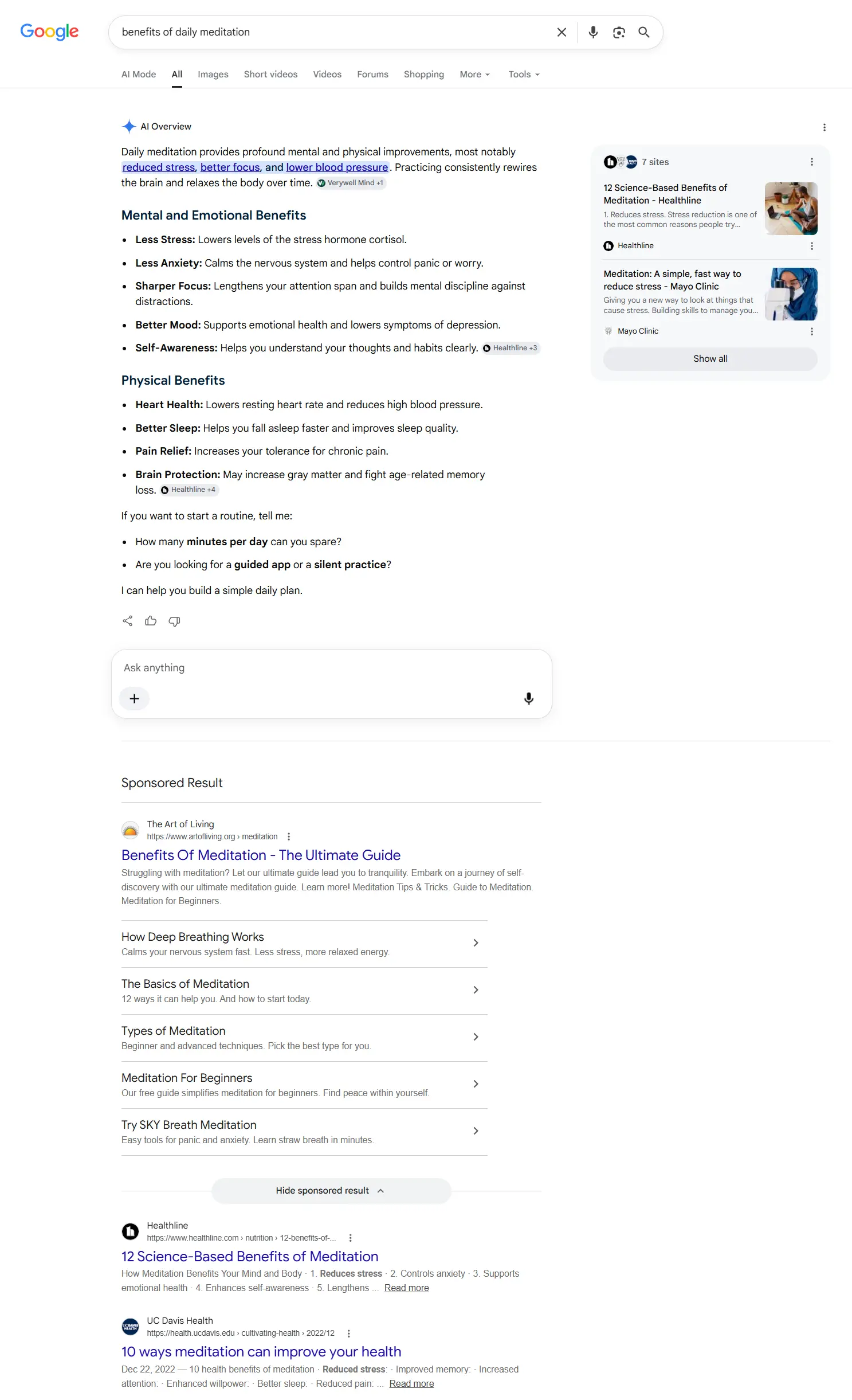
As the name suggests, an informational search occurs when a user is looking for information or wants to learn about a specific topic. Examples include: how to plant a tree, benefits of meditation, or the history of marketing.
Commercial search
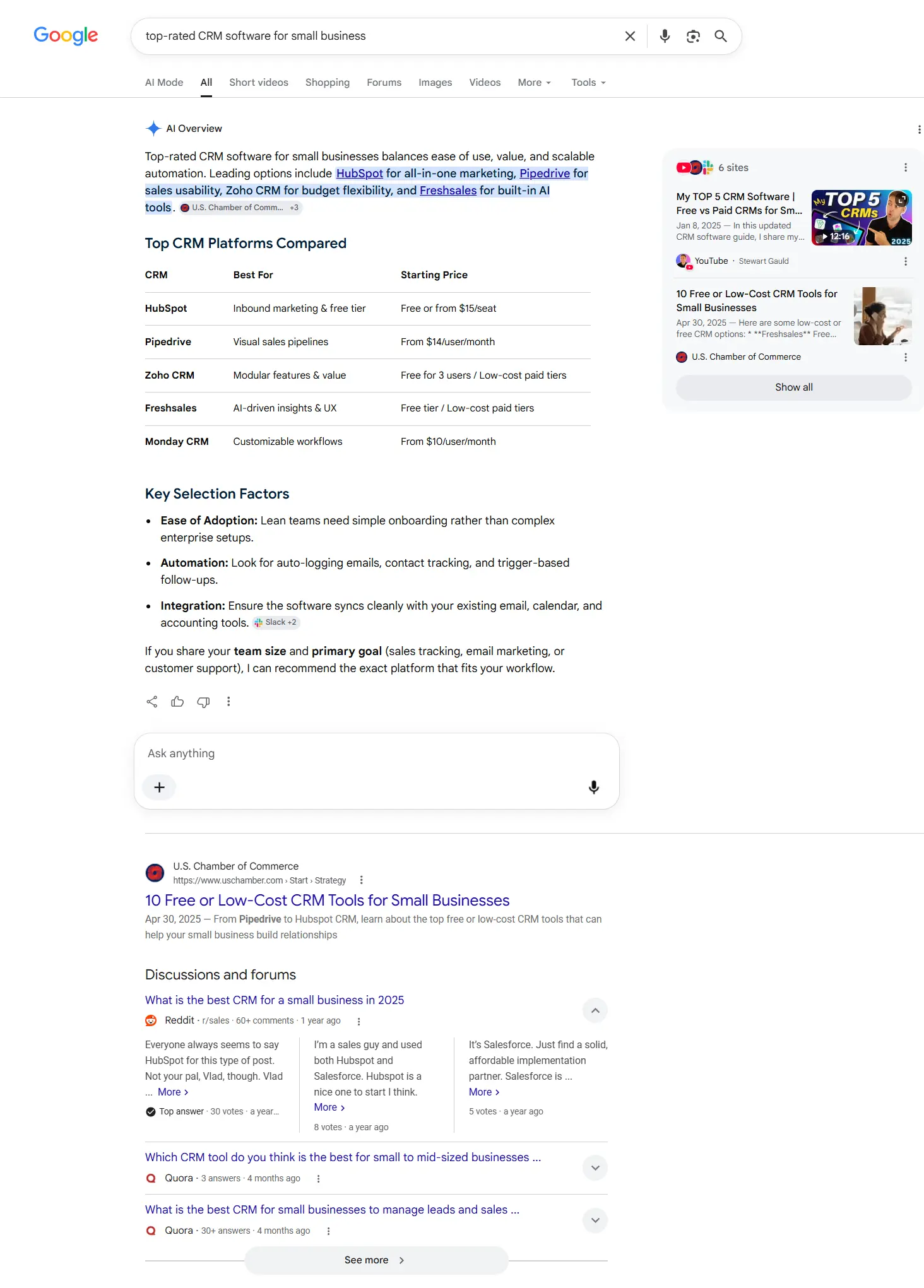
Commercial search refers to queries where the user is close to making a transaction but still needs to evaluate aspects like prices or models.
Before subscribing to a marketing tool, you might search for “best digital marketing tools” or “marketing tool pricing.” These terms have commercial intent.
Transactional search
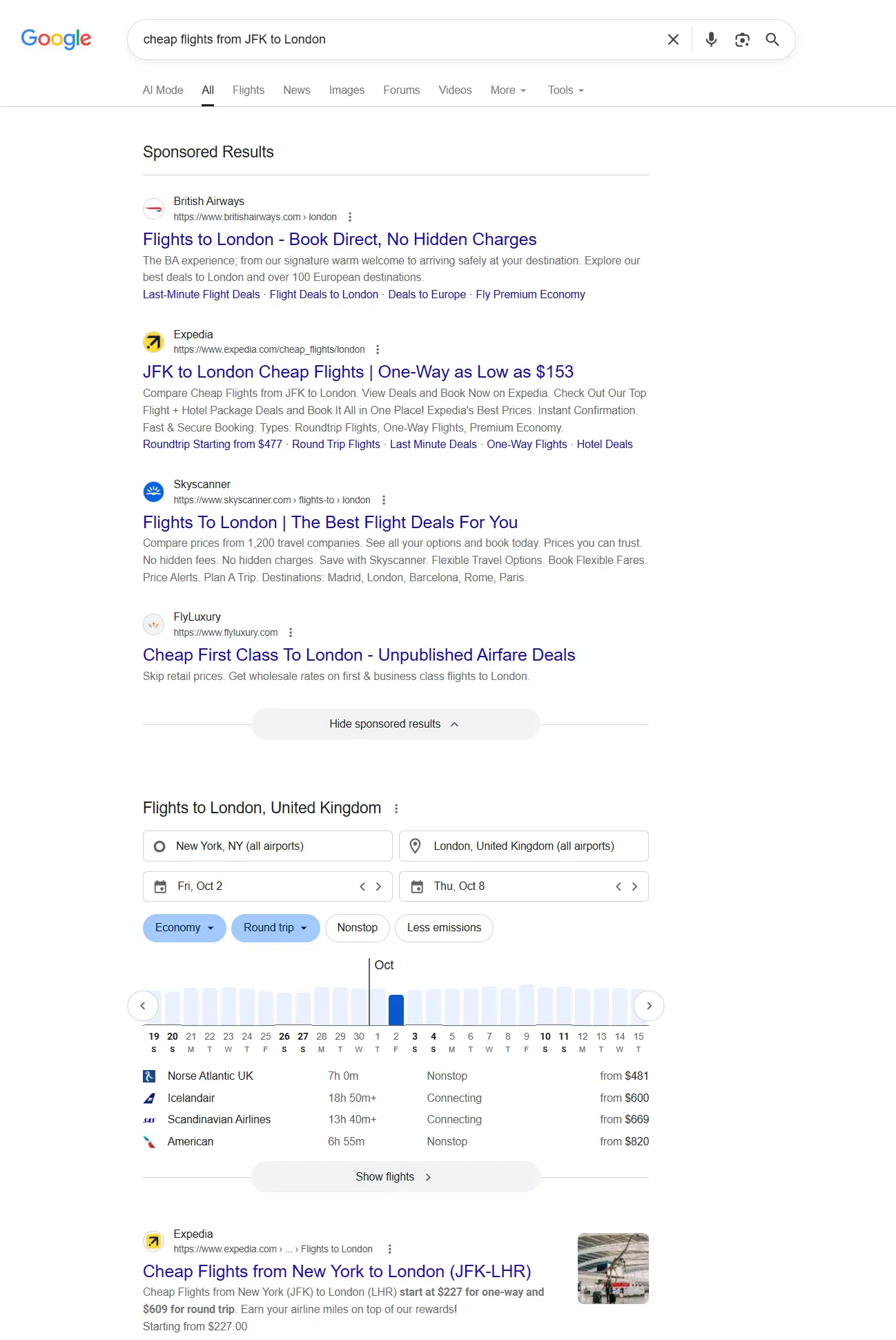
Transactional searches are related to conversion, meaning the person is ready and wants to complete a commercial transaction. This includes buying a product, hiring a service, or making a reservation.
Examples of transactional intent include: hotels in Paris, buy shoes online, or hire an electrician.
Navigational search
Navigational searches happen when someone looks for a specific website or resource. The person already knows the brand, service, or product name, or wants to access a specific feature within a site.
Facebook, Gmail login, and YouTube are examples of navigational terms.
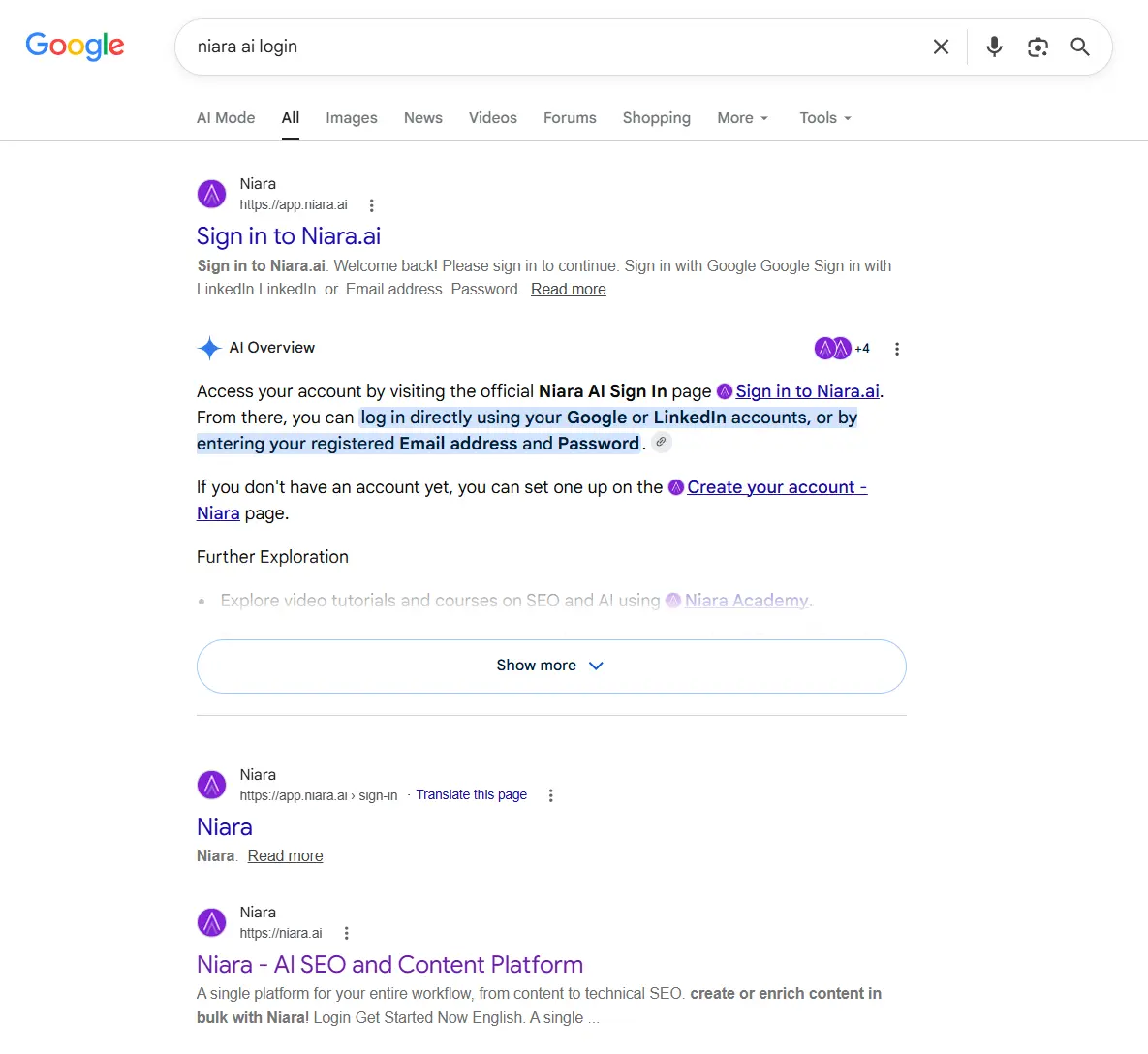
Differentiating these intents is key to building effective strategies and ensuring a more relevant experience for your target audience.
2. Put yourself in the user’s shoes
Before creating or optimizing pages, step into the user’s position. Be honest and ask yourself: is my content complete? If not, what is missing? How can I improve it? These questions will provide clarity on your next steps.
3. Analyze your current results
Pick a page and check its current ranking. Consider CTR and engagement metrics, such as time on page and return visits.
If the numbers are lower than expected, it might be because the search intent doesn’t meet user expectations. To help with optimization, look for a similar page with better engagement and compare it to yours to find improvement opportunities.
4. Analyze the SERP
SERP analysis is an investigation of the first page of Google. The idea is simple: perform the same search your user would and critically evaluate the results.
This process is your best optimization indicator (since the search engine prioritizes user experience, the displayed results are proof of what the audience wants to consume).
When observing the page, identify which features Google provides for that query. One of the most valuable clues today is the AI Overviews (AIO) summary. It synthesizes exactly what the user wants to do or learn, revealing the nuances of the search journey.
To take this further, you can use Niara’s Google AI Mode Insights to understand how well your text is optimized for generative AI and concepts like query fan-out.
This broad view of similarities and gaps ensures your strategy is based on real data rather than assumptions.
Read also: Query fan out in Google AI Mode: master the technique with Niara
5. Use SERP features
The next step is understanding which features you can leverage. Look at the frequently asked questions, topics covered in AIO, the AI Mode, and People also ask. Can you provide answers to any of these?
Including answers to these questions in your informational content can better satisfy search intent. If the SERP features videos, including one on your page (ideally your own) can help you rank better.
This is vital considering AI’s multimodal capabilities (the ability to understand images, videos, and audio).
Multimodal SEO must be part of your marketing strategy.
6. Use the correct format
Check which patterns repeat among top sites. For example, if the user’s goal is to browse products, a listing page will best serve their intent.
When searching for “genuine leather jacket for women’s,” the top results show products:
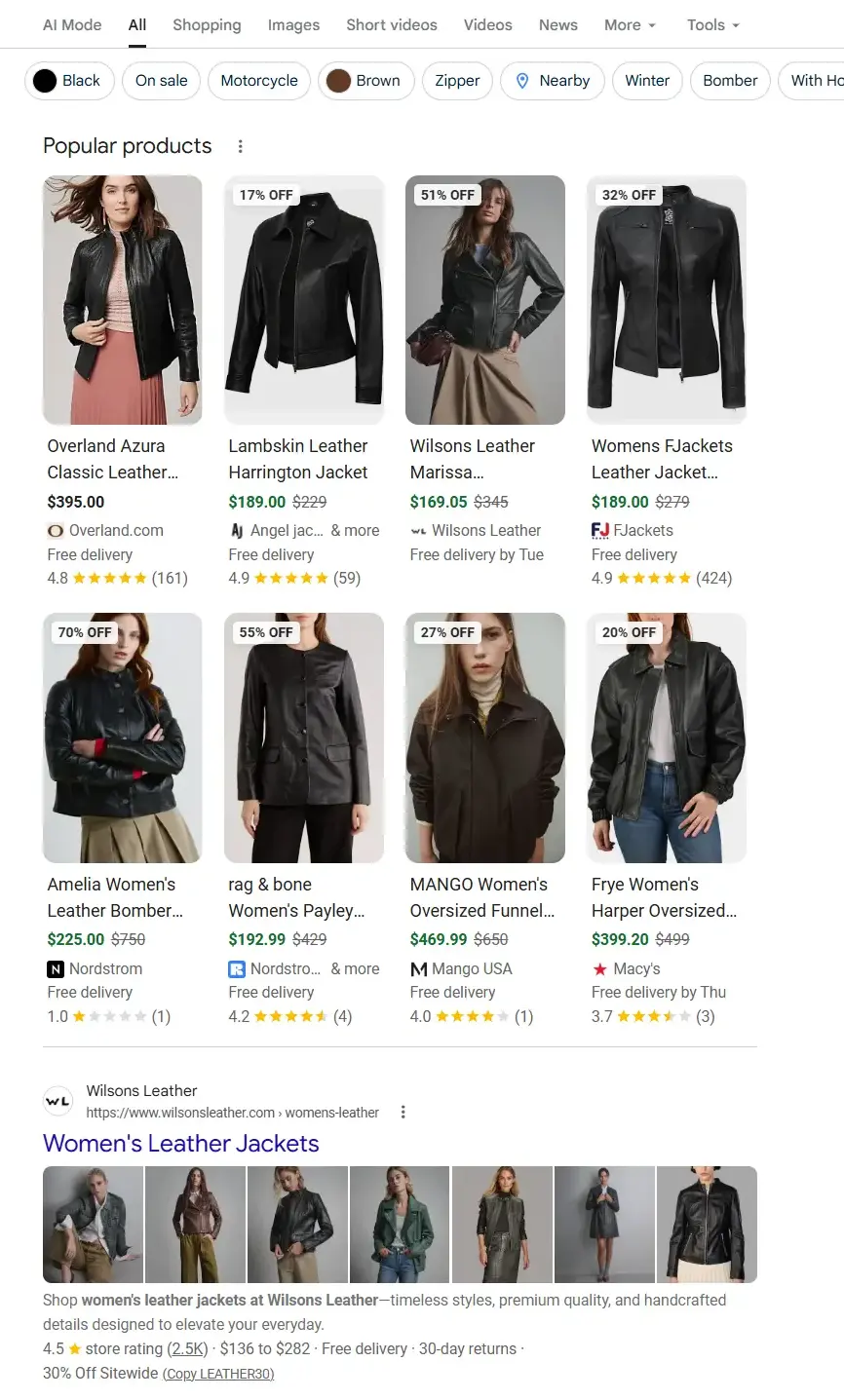
There isn’t much variation in page format. This shows that users making this search are still deciding but looking for various options. Since they are seeking inspiration, the micro-intent here is “browsing,” so adding images is essential.
7. Consider mixed search intent
Depending on the term, a single search can have different goals, which we call mixed intent. For example, searching for “wedding suit” might return results with both informational and transactional intent.
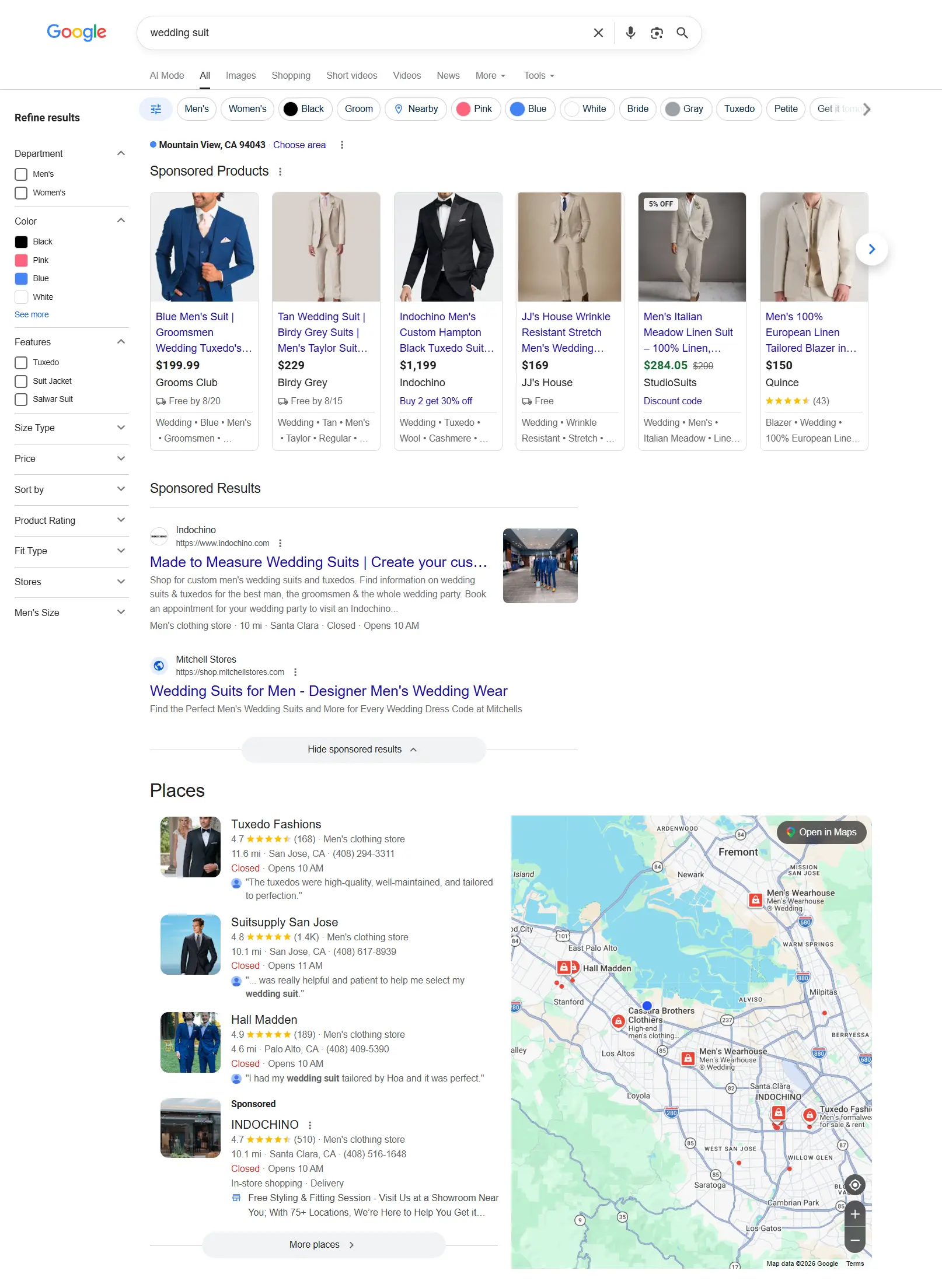
In these cases, choose the best intent based on what is relevant to your business. If you run an e-commerce site, optimizing for commercial purposes is the way to go.
8. Consider ambiguous search intent
Ambiguous searches are queries that return completely different intents because different people use the same term for different things. Searching for “Orange” might lead to the fruit, the color ou different companies.
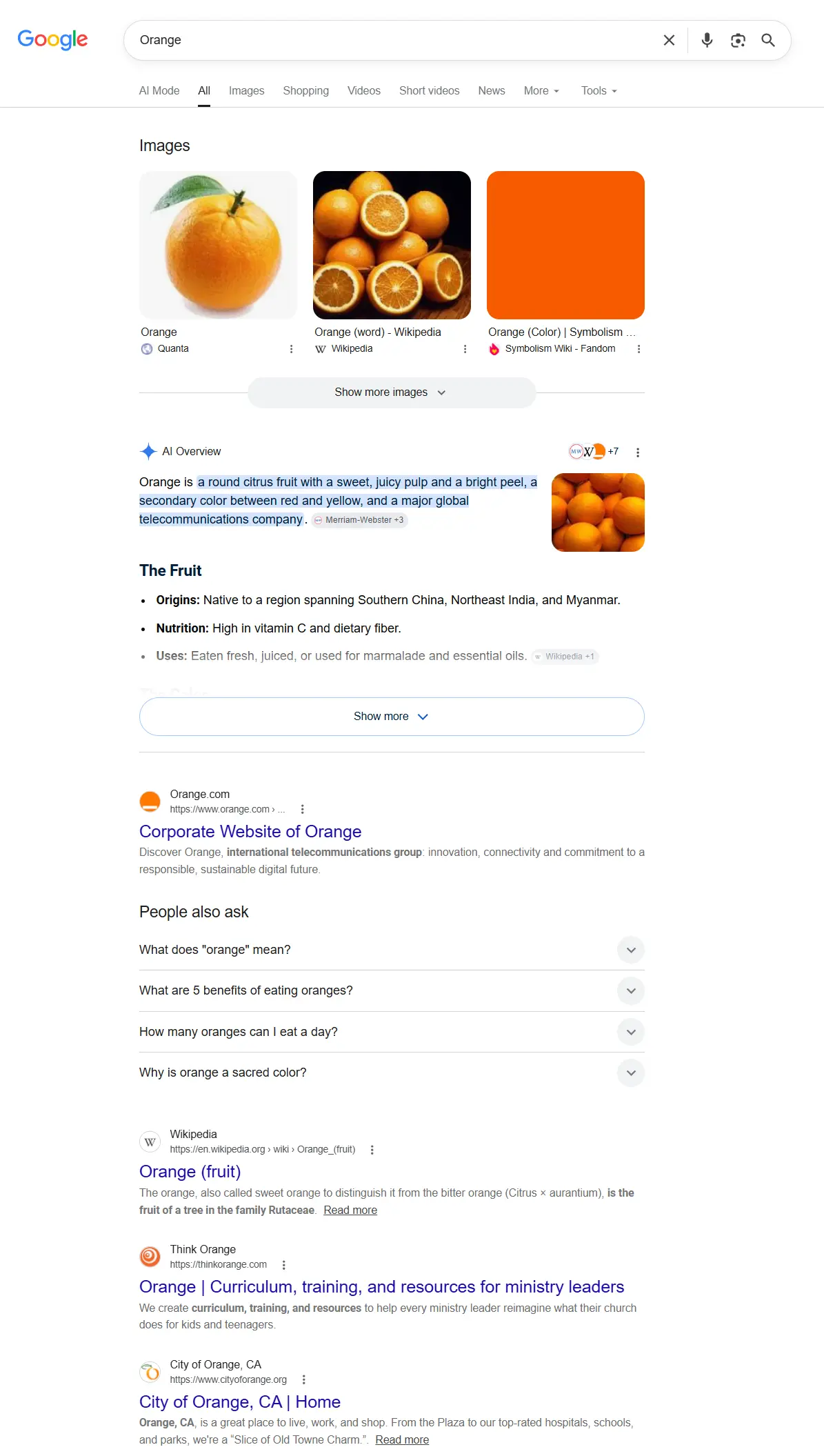
Ambiguous searches happen when search engines aren’t sure what the user wants. Again, the best option is to focus on what interests your business and make your pages relevant to the audience you want to attract.
9. Use AI to discover and optimize content according to search intent
With Niara, your AI SEO tool, you can speed up semantic optimization. The platform offers a workflow that helps from initial concepts to intent-centered optimization.
You can start with the keyword generator and then use our AI agent for clustering.
Terms from your Google Search Console
Through integration with Google Search Console, we display up to 5,000 queries regarding your site’s performance. With one click, you can identify search intent, clicks, impressions, CTR, and position for each keyword.
This allows you to quickly see which intent users search for most and where you should focus to improve rankings and clicks.
Check out our article on Search Analytics advanced filters to perform fast and efficient analyses.
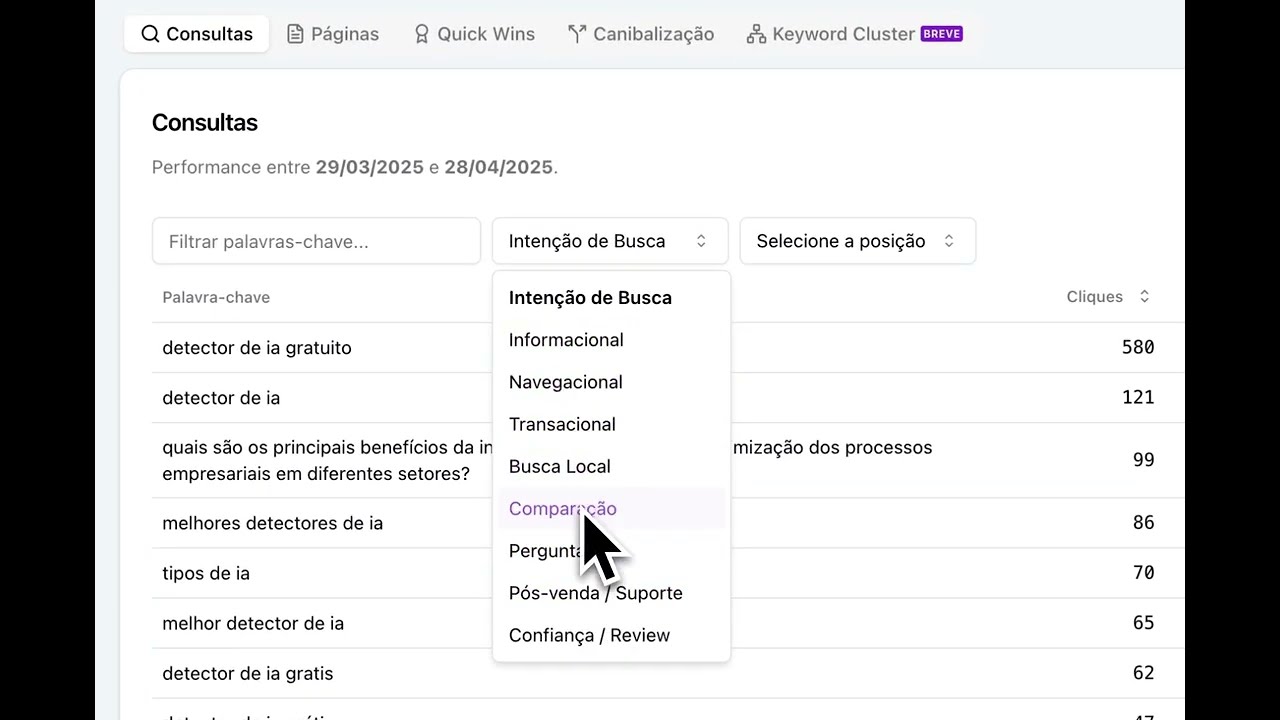
Group keywords based on search intent
You can use the Search Intent Task to group different terms, ensuring every page on your site follows the correct intent. In a few clicks, you can separate words into informational, transactional, navigational, and commercial categories.
10. Update titles and meta descriptions
Titles and meta descriptions are the links that appear in the SERP. Besides keywords, use numbers, questions, or complementary terms related to search intent.
If a user performs a transactional search like “buy party dress,” using words like “free shipping” or “discount” can help you stand out and encourage the click.
Niara can also help you create better snippets. You can use Tasks or ChatSEO to get this done faster.
11. Group keywords
A page rarely ranks for just one term. Google understands context, so the secret is grouping semantically related keywords (a technique known as clustering). This allows you to create content that answers an entire topic rather than just one question, increasing your topical authority.
If your content isn’t performing, the issue might be a lack of semantic depth. Instead of just repeating the main keyword, analyze the cluster to identify secondary terms and variations users also search for.
In Niara, use our clustering Tasks or ChatSEO to organize dozens of terms in seconds, ensuring your page covers every nuance of search intent.
Read also: Mastering semantic SEO: from entity mapping to the top of the rankings
Clustering ideas with ChatSEO
In ChatSEO, Niara’s conversational chat, you can generate new insights for content production. For instance, if a furniture e-commerce wants to create relevant articles about “sofa beds,” Niara can return various micro-intents:
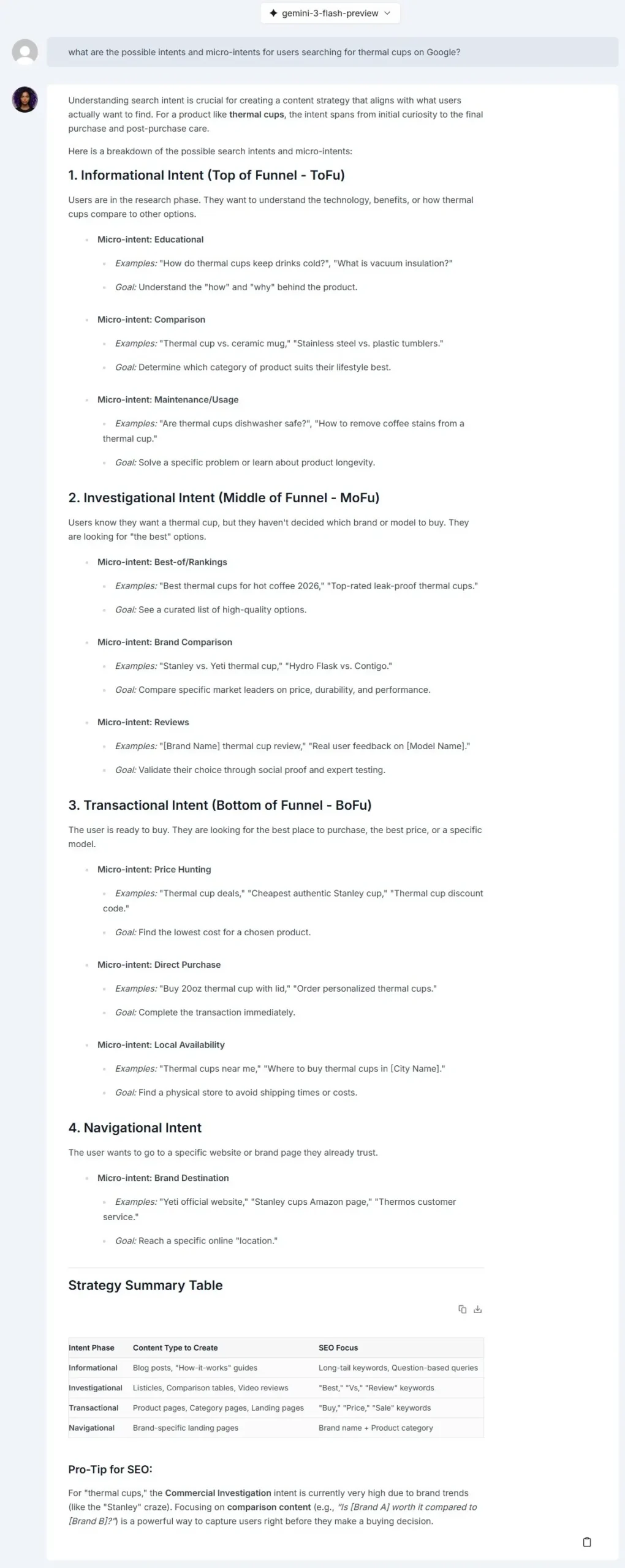
This is a great way to find new ideas for relevant content creation. From these suggestions, you can ask for more keyword ideas.
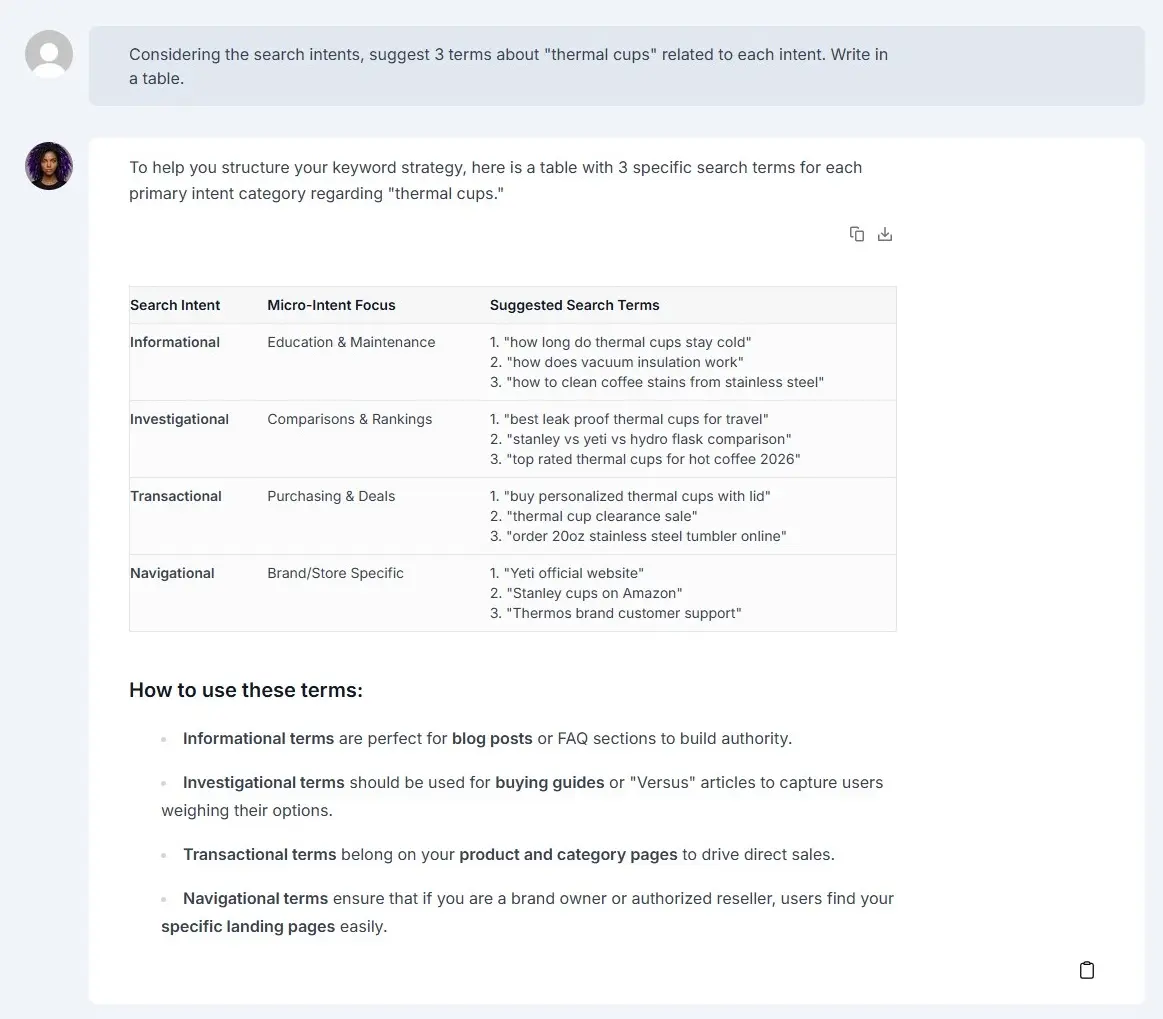
Structuring based on clusters and semantics is fundamental for quality. The richer the context provided to the tool, the more accurate the answers will be. This helps mitigate AI hallucinations, ensuring the technology produces content based on facts and logical connections.
12. Include SEO entities as support
You can combine user intent with SEO entities to create more relevant and complete content.
For Google, an entity is not just a keyword but a unique object or concept that can be clearly identified. It could be a person, place, organization, physical object, or even an abstract concept like “sustainability.”
When searching for “sofa bed,” the search engine looks for related entities that provide context and truthfulness, such as:
- Brands (e.g., IKEA, West Elm)
- Materials (e.g., linen, memory foam, hardwood frame)
- Components (e.g., pocket coils, pillow top)
- Concepts (e.g., ergonomics, space optimization)
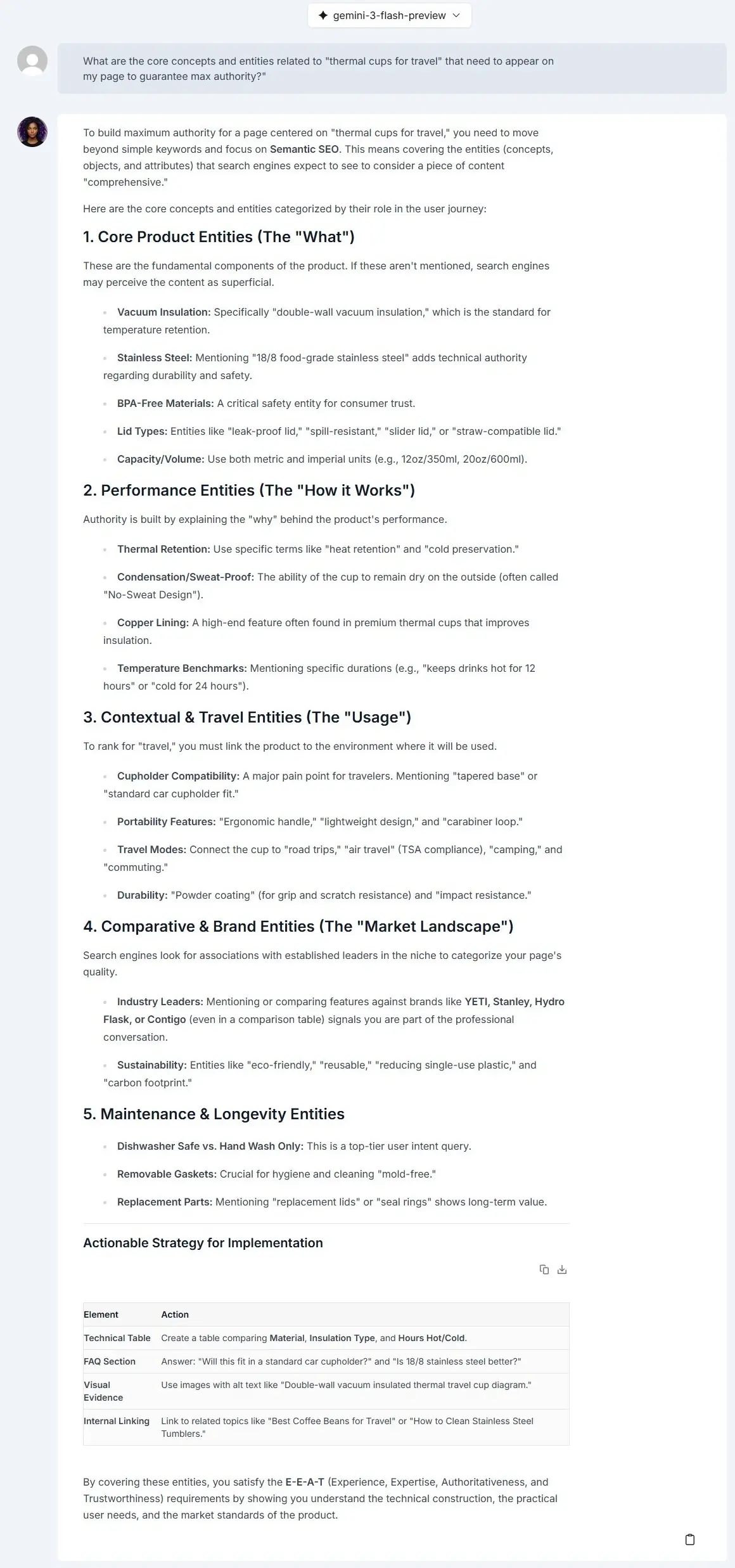
Intent and entities are linked because they determine the meaning of the content. You should understand the topic deeply and know your audience’s pain points to create high-quality content that provides every possible solution.
If you need clearer direction, ask Niara for semantic guidance via ChatSEO:
13. Follow E-E-A-T parameters
E-E-A-T guidelines relate to quality content production. In the age of AI, the “E” for experience matters a lot. It is often best to have an experienced professional write the article. If that isn’t possible, ask for an expert’s opinion or quotes to make the text more authoritative.
14. Review your communication
All your content must align with search intent. Review your material to ensure you are communicating effectively. This means checking if the words used match the goal. On an informational page, terms like “buy now” or “for sale” usually shouldn’t be used.
Choosing the right words is the best way to engage the reader and ensure they are satisfied with what they found.
15. Ask for feedback
Finished the content? To be sure everything is aligned, ask someone else to read and review it. Ask if they understood the intent and if they have suggestions. Since your content is for real people, getting a different perspective is important.
16. Ask for AI feedback
Short on time or don’t have a reviewer? You can ask generative AI to review the content and provide optimization ideas.
We asked Niara to review a snippet to check its alignment with search intent. Here was the response:
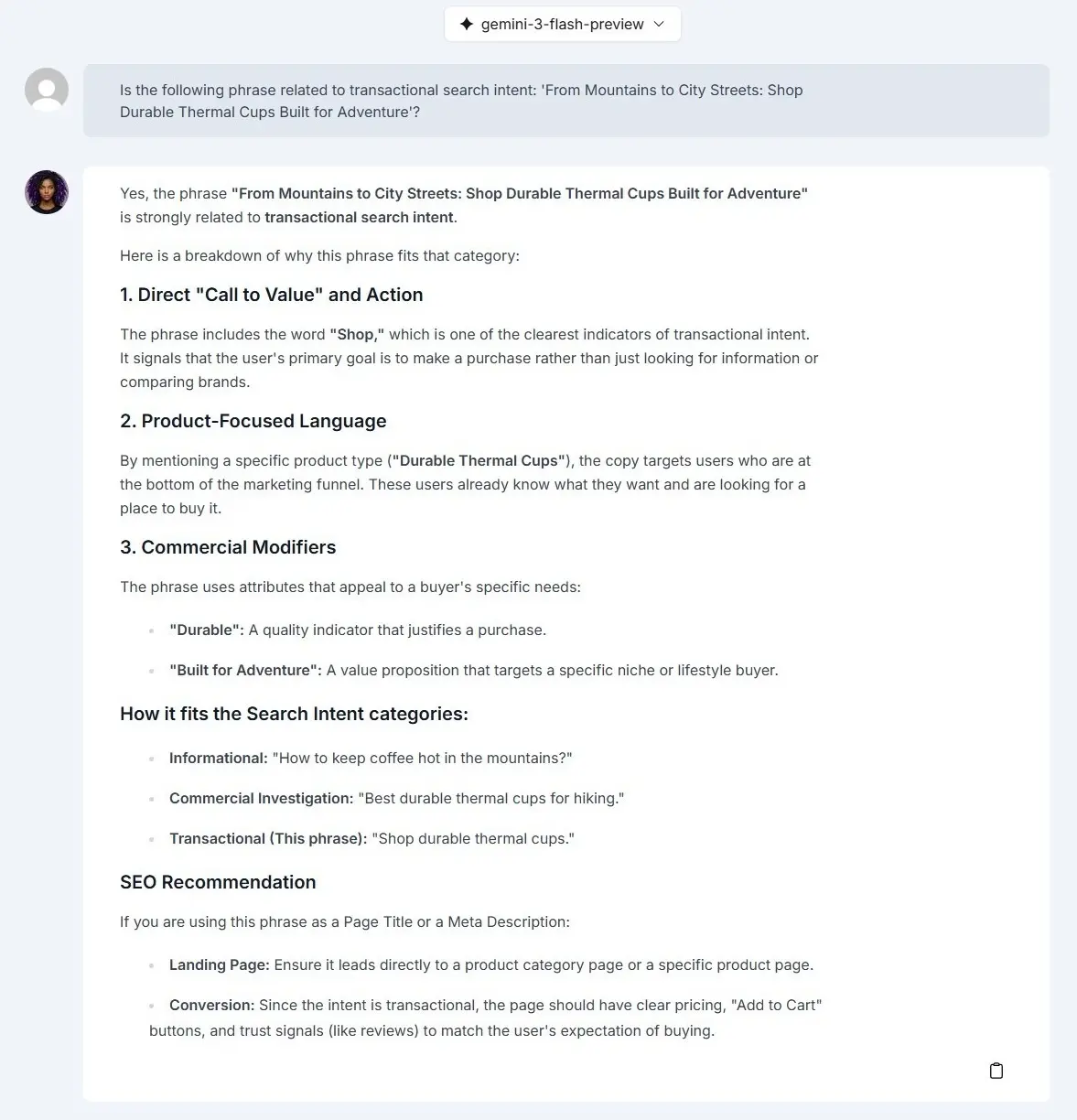
You can ask additional questions and request suggestions until you are satisfied.
17. Check your CTAs
Are your calls to action aligned with search intent? As mentioned, “for sale” might not be ideal for informational pages, just as “read more” isn’t the best option for transactional pages. Review your CTAs to ensure everything is connected properly.
18. Optimize, optimize, and optimize
Search intent (and how search engines understand it) can change frequently. A result displayed today might change completely tomorrow.
Never stop analyzing and optimizing strategic pages. This is the best way to ensure your site is found at the right moments.
By creating and optimizing content based on search intent, you offer a more relevant and valuable experience. This increases your chances of attracting qualified traffic, improving rankings, and reaching your digital marketing goals.
Now it’s time to put these strategies into action. Remember to always adjust based on user feedback and performance metrics. Over time, you will master the art of meeting user needs. Count on Niara to streamline the process.
Optimize for people, not just algorithms
While AI has drastically transformed how users search and consume information, the heart of semantic strategy remains the same: the human being.
After all, they are the ones who generate revenue and sustain your business. If a customer doesn’t find content that resonates with their actual pain or need, the buying journey stops and conversion becomes impossible.
A good brand experience starts on the SERP but is solidified by the utility of what you deliver.
Try Niara for free
To join Niara, just open your account, select your preferred plan, and confirm your choice on the Stripe screen.
Start for free without needing to add credit card details.
Discover how our AI agents and automations can simplify your search intent analysis and accelerate strategic content production.
It’s time to dominate search channels and focus on what really matters: growing your business.
Enjoy! 😁