
Creating a landing page that actually converts requires more than just a pretty design and a submit button. It demands a strategic blend of psychology, data-driven SEO, and crystal-clear communication.
Imagine a business owner who has just poured thousands of dollars into a high-stakes ad campaign. The clicks are rolling in, and the analytics dashboard is glowing green with traffic. But as the hours turn into days, the “Thank You” page remains a ghost town. The traffic is there, but the revenue isn’t. This gap is where most digital strategies falter — not because the product is lacking, but because the landing page failed to bridge the distance between curiosity and commitment.
High-converting landing pages are the backbone of any successful growth engine. Whether you are a solo freelancer or part of an enterprise team, mastering the art of the landing page is what separates those who simply get clicks from those who get results.
In this guide, we’ll break down the anatomy of a high-converting landing page and show you how to leverage cutting-edge AI to build them 10x faster without losing the human touch.
Also read: AI for Copywriting: What it is, How to Use it, and Benefits (Bonus: Effective Prompt Tips!)
What is a high-converting landing page?
A landing page is a standalone web page created specifically for a marketing or advertising campaign. Unlike a homepage, which encourages exploration, a landing page is designed with a single focus, known as a Call to Action (CTA). Its success is measured by its ability to fulfill a specific conversion goal, whether that’s capturing an email address, selling a product, or securing a signup for a webinar.
Essentially, a high-converting landing page removes friction. It answers the user’s questions before they even ask them and provides a clear, undeniable path to the solution they are seeking.
Core pillars of a high-converting landing page
To build a page that performs, you need to treat it like a puzzle where every piece must fit perfectly. You need to consider:
Value proposition and positioning
Your value proposition is the why.
Why should someone choose you over a competitor? Why should they give you their data right now?
Think of your value proposition as a promise of excellence. It’s less about what the product does and more about the specific impact it has on the user’s life.
For example, instead of saying “We offer SEO software,” a benefit-led positioning would be “Dominate the SERPs and reclaim your time with AI-driven SEO automation.” The first is a description; the second is a transformation. To craft a unique value prop, identify the primary pain point of your audience and position your offer as the direct antidote.
Copywriting and storytelling
Copy is the dialogue you have with your visitor. High-converting copy is scannable and reader-friendly. ince most visitors skim landing pages rather than reading them, use storytelling to position the user as the hero of the journey.
Start with the problem they are facing, introduce the “villain” (the pain point), and then present your product as the “guide” that provides the solution.
Use power words, but keep it simple. Avoid industry jargon that might confuse a newcomer. Your goal is to be understood, not to sound like a dictionary.
UX design and information architecture
User Experience (UX) is about reducing cognitive load, the mental effort required to process information. A high-converting LP follows a logical hierarchy. The most important information (the headline and CTA) should be the most visually prominent.
Information architecture refers to how you organize your content. Don’t overwhelm users with too many choices. Remove the main navigation menu; on a landing page, you want the user to go forward (convert) or go back, but not wander off to your “About Us” page.
Visuals and video strategy
A picture is worth a thousand words, but only if it reinforces the offer. Use hero images that show the product in action or depict the “after” state — the happy customer who solved their problem.
Video is a powerful conversion tool. However, don’t just use video for the sake of it. Ensure it has captions (for those watching on mute) and a compelling thumbnail. Avoid autoplay with sound, it’s an immediate “back button” trigger for most users.
Cognitive ease and readability
Readability is the ease with which a reader can understand a written text. To achieve cognitive ease:
- Use high contrast (dark text on a light background).
- Utilize bulleted lists to break up heavy blocks of text. Applying a smart SEO chunking strategy helps both users and search engines digest your value faster.
- Incorporate plenty of white space to give the elements room to “breathe.”
- Stick to standard fonts that are easy on the eyes.
When a page is easy to read, the user feels more comfortable, which subconsciously builds trust.
Fast performance and technical optimization
You could have the best copy in the world, but if your page takes 10 seconds to load, no one will see it. Page speed is a critical conversion factor. Use image optimization (WebP formats), caching, and lazy loading to ensure your page is lightning-fast.
Furthermore, accessibility is no longer optional. Ensure your page is navigable via keyboard and that all images have descriptive Alt Text. A page that works for everyone is a page that converts for everyone.
Creating a high-converting landing page from scratch
Creating a high-converting landing page that drives consistent ROI requires moving beyond basic design to a strategy rooted in buyer psychology and data. To turn cold traffic into loyal customers, you must align your unique offer with the visitor’s specific pain points while maintaining technical excellence and page speed.
To build one step-by-step, start by defining a singular goal and crafting a compelling headline that communicates your value proposition instantly. Follow this by integrating social proof—such as testimonials or case studies—to build credibility, and conclude with a high-contrast, frictionless call-to-action (CTA) optimized for both mobile users and search engine visibility.
1. Set your goal and map the funnel
Before you draft a single word, you must define what success looks like. A landing page without a clear goal is just a digital flyer that wastes your ad spend. Your goal dictates the entire design and copy hierarchy.
Practical Example: if you’re launching a B2B SaaS trial, your goal isn’t brand awareness, but qualified sign-ups. Every element, from the headline to the footer, must push the user toward that single form.
- Define your North Star metric: is it form submissions, direct sales, or webinar registrations?
- Map the “Next Step”: what happens after the click? Align your Thank-You page and follow-up emails to prevent drop-offs.
- Track micro-conversions: monitor scroll depth and video views to see where users lose interest.
2. Know your audience and craft your offer
You cannot sell to everyone. High conversion starts with deep audience empathy, which means understanding their pain points better than they do. Your offer shouldn’t just list features; it must promise a transformation.
Practical Example: instead of saying “We have 24/7 support” (Feature), say “Get expert help in minutes so you never miss a campaign deadline”.
- Identify the “Pain & Gain”: what keeps your customer up at night, and how does your product fix it?
- Research intent: look at search queries to understand if users are looking for a quick fix or a long-term partner.
- Draft a “No-Brainer” offer: make the value so obvious that saying “no” feels like a mistake.
3. Write copy that captures and persuades
The copy is the brain of your LP. Its job is to capture attention in under 5 seconds and lead the reader down the page using a logical information hierarchy.
Practical Example: use copy frameworks, like AIDA framework (Attention, Interest, Desire, Action). Start with a bold headline, build interest with benefits, create desire with social proof, and end with a clear command.
- Headline & Subhead: the headline hooks them; the subhead keeps them. Focus on the primary outcome.
- Scannable Body Copy: use short paragraphs and bold text. Most users skim, so make sure they get the gist in 10 seconds.
- Benefit-driven Bullets: don’t just say what it does; say what they get.
In a world of generic text, knowing the difference between commodity and non-commodity content is what actually builds trust.
4. Optimize visuals and trust signals
Visuals are emotional triggers. Combined with trust signals, they lower the “skepticism barrier” that every new visitor has.
Practical Example: use a hero image that shows the product in action. Follow it immediately with logos of well-known clients to create a “Halo Effect” of credibility.
- Hero Visuals: high-quality images or short videos (under 90s) that demonstrate the value proposition.
- Specific Social Proof: replace “Great service!” with “Increased our leads by 40% in 2 months.”
- Trust Badges: include security certifications or “Money-Back” guarantees near the CTA to reduce friction.
Read more: Multimodal SEO: Learn How to Make Your Brand the Best Answer in Any Digital Format
5. Design CTAs and forms for zero friction
The Call to Action (CTA) is the moment of truth. If your form is too long or your button is hidden, your conversion rate will plummet regardless of how good your copy is.
Practical Example: instead of a generic submit button, use action-oriented text like “Get My Free Audit” in a high-contrast color that pops against your background.
- Strategic Placement: keep your primary CTA “Above the Fold” (visible without scrolling).
- Minimize Fields: every extra form field can drop conversions by 10%. Only ask for what is strictly necessary.
- Micro-copy: add a small note like “No credit card required” to ease user anxiety.
6. Technical performance and SEO health
A slow page is a dead page. Technical performance affects both user experience and your Quality Score in paid ads, directly impacting your cost-per-lead.
Practical Example: studies says that a 1-second delay in mobile load times can decrease conversions by up to 20%. Optimization is literally a matter of revenue.
- Speed is King: focus on correct image optimization. Use WebP images and clean code to keep load times under 2 seconds.
- Mobile-First Design: ensure the experience is flawless on smartphones, where most clicks happen.
- Accessibility: use proper Alt Text and header structures so everyone (and search engines) can read your page.
Build from start: step-by-step playbook
Follow this repeatable process to ensure nothing falls through the cracks.
Discovery and goals
- Define the Goal: decide if success is a form submission, a direct sale, or a webinar sign-up to dictate your design hierarchy.
- Profile the Persona’s Pain: identify the specific problem keeping your audience up at night. Use search intent data to understand if they need a quick fix or a long-term partner.
- Craft a “No-Brainer” Offer: focus on transformation, not features. Your offer should make the value so obvious that saying “no” feels like a missed opportunity.
Wireframes, copy, and assets
- Sketch the Layout: don’t worry about colors or branding yet. Focus on the information hierarchy, ensuring the most critical value proposition is at the top (above the fold) and the flow leads naturally to your CTA.
- Write Persuasive Copy: apply your favorito copy framework to guide the user. Craft a bold, benefit-driven headline that captures attention in 5 seconds, supported by a subhead that reinforces the outcome. Use scannable, short paragraphs and bullet points that transform features into clear “What’s in it for me” (WIIFM) benefits.
- Gather Assets: select high-quality visuals, such as a hero image showing your product in action or a short video. Collect your specific social proof—real testimonials with data and logos of trusted partners—to lower the skepticism barrier.
Launch, measure, and iterate
- Technical QA Checklist: test for zero friction. Check all links, verify form submissions, and ensure the mobile experience is flawless and fast (under 2 seconds).
- Set Up Conversion Tracking: ensure your GA4 events and tracking pixels are firing correctly. Monitor micro-conversions, like scroll depth, to see where users lose interest.
- A/B Test and Optimize: never stop iterating. Once you have enough traffic, test one element at a time (like Headline A vs. Headline B) to consistently improve your ROI.
The role of AI in strategy
We know that the operational side of SEO and copywriting can be overwhelming. This is where Artificial Intelligence becomes your greatest ally. Rather than spending hours staring at a blank page or analyzing spreadsheets, you can use AI to automate the heavy lifting, from generating data-backed briefs to auditing technical gaps.
By integrating tools like Niara into your workflow, you bridge the gap between strategy and execution. Niara simplifies the “tech-heavy” parts of SEO and content creation, allowing you to focus on what really matters: scaling your results.
How to build converting landing pages using Niara’s AI SEO agents
Now that you have the framework, let’s talk about execution. Building these pages manually is slow. Using generic AI is risky because it doesn’t know your brand. That’s where Niara changes the game.
Read more: Beyond ChatGPT: Why Your SEO Team Is Wasting Time (And How Niara Helps)
Step 1: Define your identity with Brand Guidelines
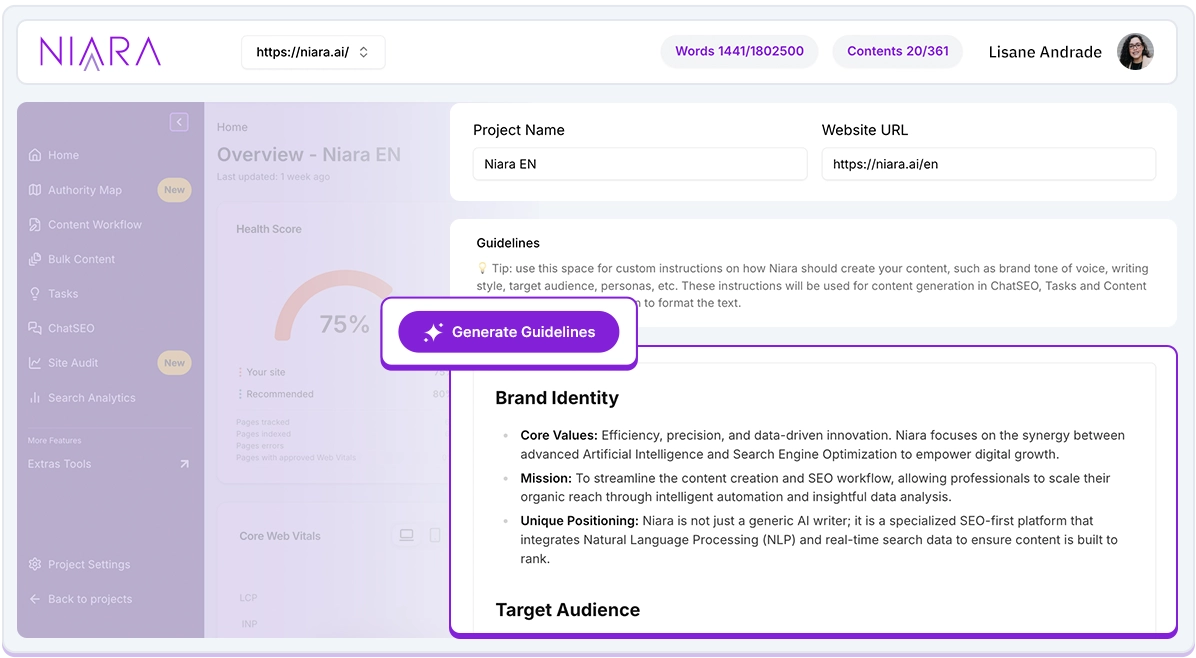
Before writing a single line, you must ensure the Niara speaks your brand’s language. You want a landing page that sounds like you, right?
To streamline your content creation, access your Niara project settings to establish your Brand Voice Guidelines by defining your persona, tone, and specific guidelines.
Unlike generic AI tools, Niara automatically applies this context to every interaction, ensuring all your marketing assets remain consistent. Whether your brand is relaxed or technical, the platform generates copy that matches your unique identity perfectly, eliminating the need to repeat instructions for every new task.
Learn more about how to maintain your unique brand voice using AI
Step 2: Building structure and copy in ChatSEO
Now, it’s time to get to work. ChatSEO is your 24/7 strategist. This is our SEO-trained assistant that understands search intent.
Simply ask Niara to structure your headlines, subheadlines, benefit-driven bullet points, and calls to action (CTAs) tailored specifically to your offer. To gain a competitive edge, you can attach files or paste competitor data, allowing the AI to craft copy that targets exactly where your rivals fall short.
After opening the chat, you can use this prompt idea to generate your landing page structure and copy:
Act as a Senior Copywriting and UX Design Specialist focused on high-conversion strategies. Your goal is to create the structure and textual content for a high-performance Landing Page based on the information provided below.
1. Business Context
Product/Offer: [Describe your offer, e.g., Vegan Recipes eBook]
Target Audience: [e.g., People looking to start a plant-based diet but struggle with cooking]
LP Goal: [e.g., Lead Generation / Direct Sale / Pre-launch]
Main Pain Point: [e.g., Lack of time to cook and fear of nutritional deficiency]
Key Benefit: [e.g., Practical recipes ready in 15 minutes]
2. Page Structure (please write the content for the following sections):
Headline: A clear and direct value proposition that captures attention in 5 seconds.
Subheadline: Complementary text that reinforces the benefit and builds desire.
Offer Description (Bullet Points): List 3 to 5 key benefits focused on the user’s transformation (not just features).
Social Proof: Suggest where to place testimonials or impact numbers (e.g., “Join 1,000+ students”).
Form: Indicate which fields are strictly necessary to reduce friction.
CTA (Call to Action): Provide 2 persuasive options for the button text.
Urgency/Scarcity Elements: Suggest a phrase or element (like a countdown or limited bonus) if applicable.
We tested this same prompt in Niara’s ChatSEO to see the results:
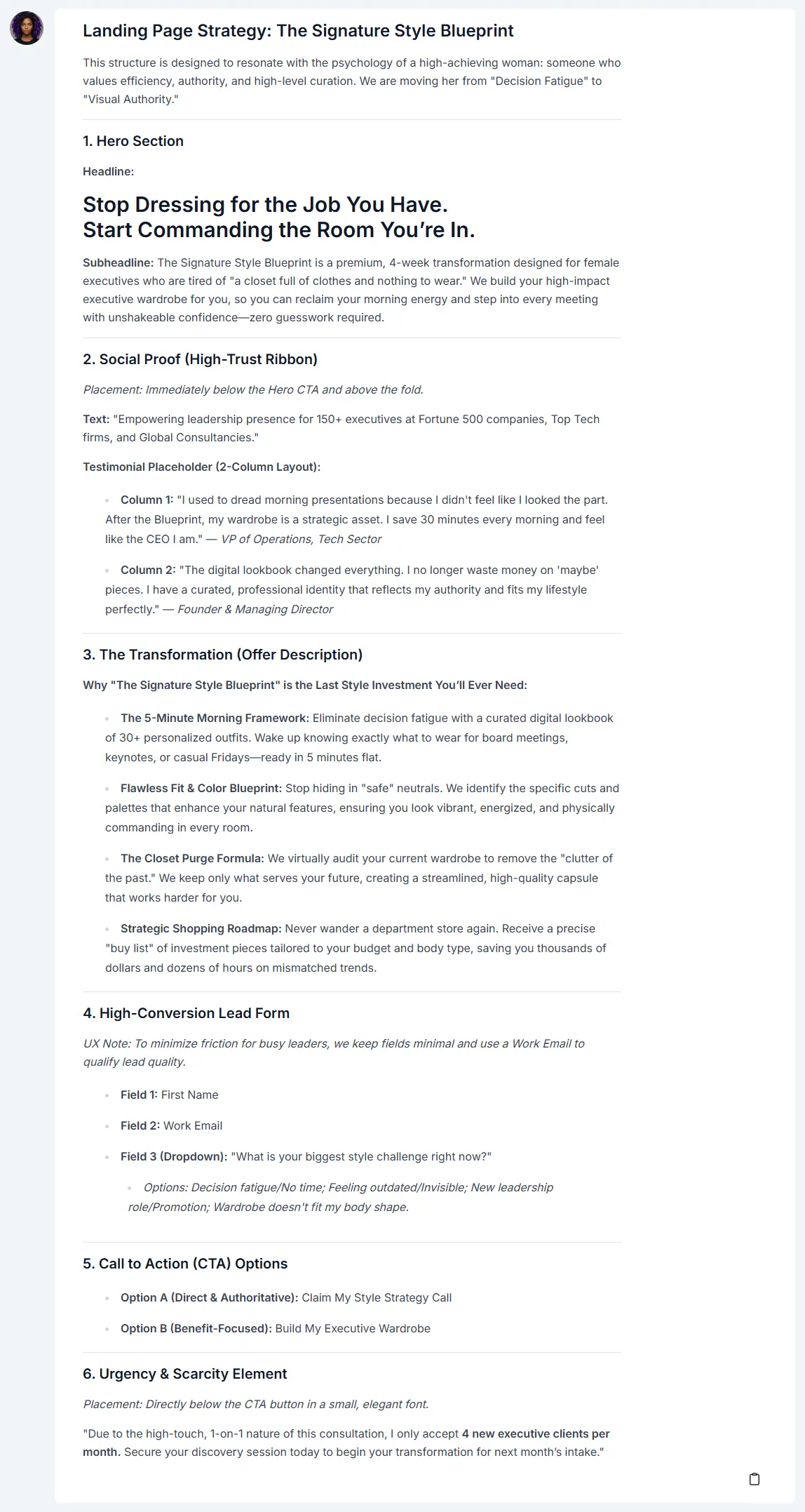
Niara provides you with a complete initial landing page draft based on your specific instructions. But that’s just the starting point.
- Fine-tune in real-time: After the first output, you can chat with Niara to refine and polish the results. Everything is fully customizable. Instead of spending hours overthinking every detail, Niara acts as your strategic partner to accelerate the entire process.
- Context-rich generation: You can upload PDFs or internal documents to provide deeper context. You can also enable Web Search to allow Niara to analyze external references, competitors, or live trends, ensuring your LP is perfectly aligned with current market standards.
- Be specific for better results: The more detail you provide (including examples, links, and specific requirements) the more accurate and tailored Niara’s output will be.
Once you’re happy with the content, you can ask more technical questions. For instance, ask Niara how to set up tracking events to monitor user behavior or how to optimize the page for better performance.
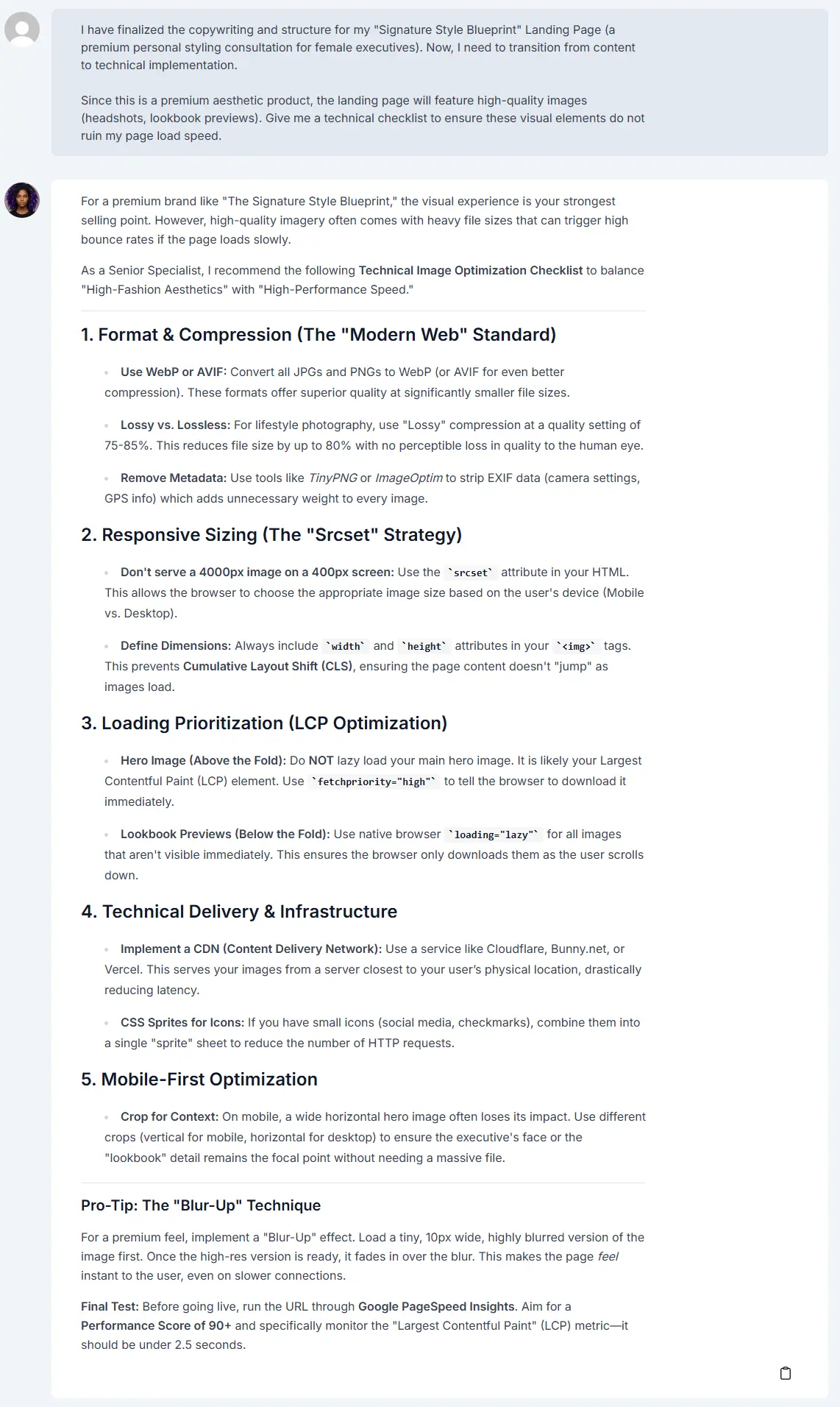
Stay tuned: additionally, the upcoming Content Workflow feature will soon allow you to automate the creation of entire content briefs and supporting articles for your landing pages with just a single click.
Step 3: Smart monitoring with Search and Conversational Analytics
Once your landing page is live, the real work begins: monitoring performance to ensure you’re reaching the right executives. Niara’s Search Analytics goes far beyond standard tools, offering 5x more data than Google Search Console.
In the era of Generative AI, visibility is changing. Niara allows you to specifically filter conversational searches that trigger AI Overviews. Understanding how your site surfaces in these AI-driven results is crucial for staying ahead of the curve and capturing the attention of modern leaders.
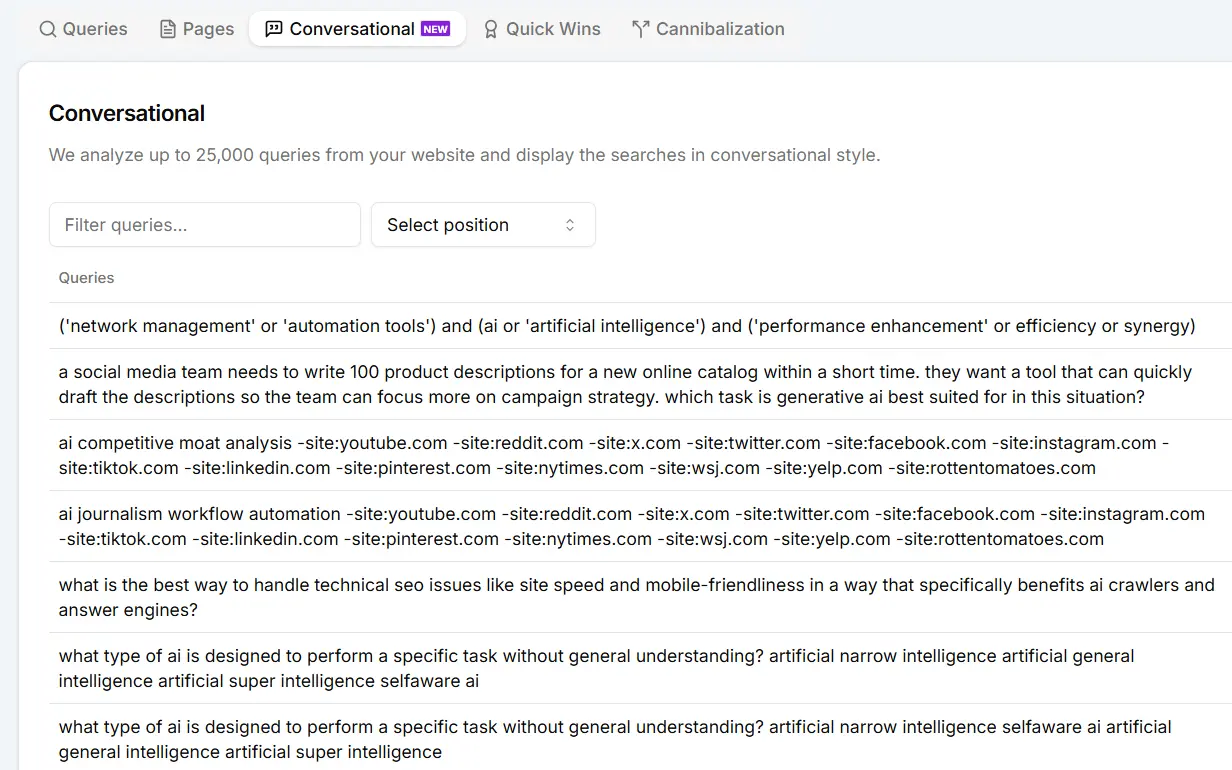
Furthermore, our Conversational Analytics simplifies your entire reporting workflow. Instead of digging through complex spreadsheets, you get a clear view of impressions, clicks, CTR, and average position.
In addiction to showing what is happening with your organic performance, it provides actionable recommendations on what to do next.
Whether it’s a content tweak or a technical fix, you’ll receive clear guidance to maintain your competitive edge and ensure your premium offer continues to command the search results it deserves.
Step 4: Technical monitoring with Site Audit
Even the most beautiful landing page won’t convert if technical glitches keep it from ranking. Once your page is live, you need a way to ensure everything is running smoothly under the hood.
With Niara’s Site Audit (our Technical SEO Agent), you can automatically monitor all technical issues that might be hindering your performance or dragging down your rankings. From broken links to crawl errors, the tool identifies exactly what is holding you back.
A major advantage is our direct integration with PageSpeed Insights. This integration provides deep visibility into loading times and Core Web Vitals, ensuring your high-quality lookbook previews don’t compromise the user experience.
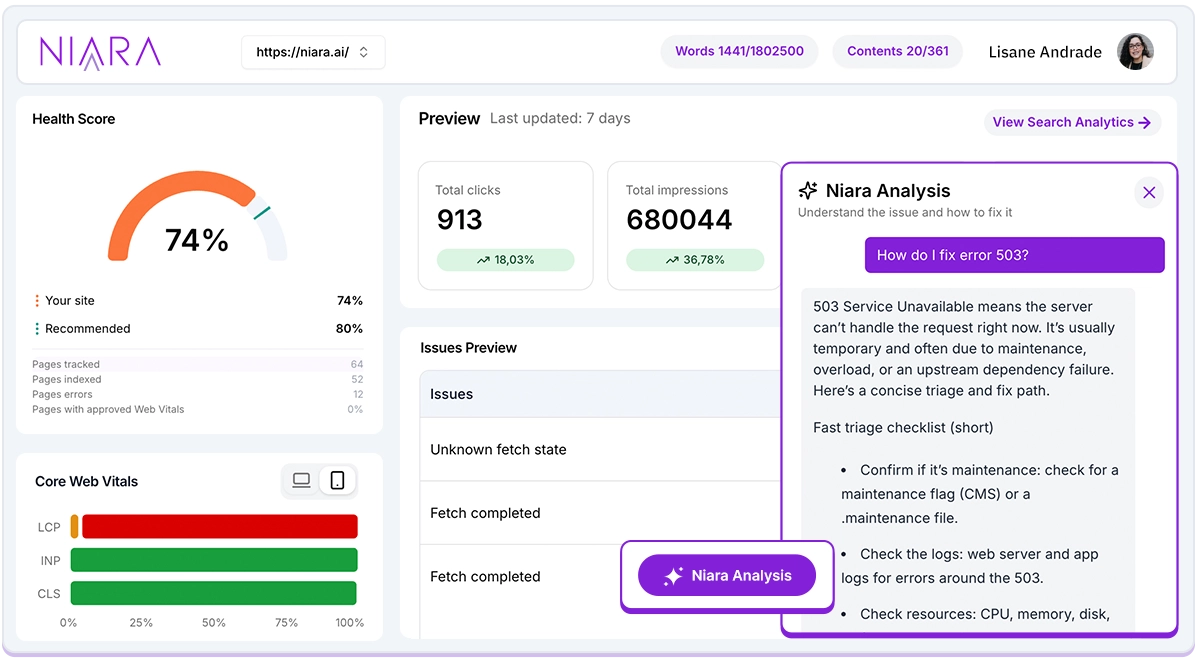
Niara doesn’t just flag these issues; it helps you prioritize fixes so your site remains fast, accessible, and favored by search engines. By keeping your technical foundation solid, you guarantee that your audience enjoys a seamless, high-end digital experience from the very first click.
Step 5: Optimization analysis with Google AI Mode Insights
If you already have a page live but it’s not converting, don’t play the guessing game. You need to know how the “new” Google (the one driven by AI Overviews) perceives your page. That’s when Google AI Mode Insights come into play.
Enter your landing page URL into Google AI Mode Insights. Niara analyzes your page using official Google documentation and SEO best practices to see how it aligns with AI Overview requirements. After the analysis, you’ll get a detailed diagnosis of content gaps, SEO recommendations, and what’s missing for your page to be recognized as a topical authority.
It tells you exactly how to optimize your content so that AI-driven search engines recommend your landing page to users.
Niara in action: real-world landing page analysis and optimization examples
Theory is essential, but seeing optimization in action is where the real learning happens. To show you the power of Niara’s Google AI Mode Insights, we’ve selected two distinct landing pages across different industries for a deep-dive analysis.
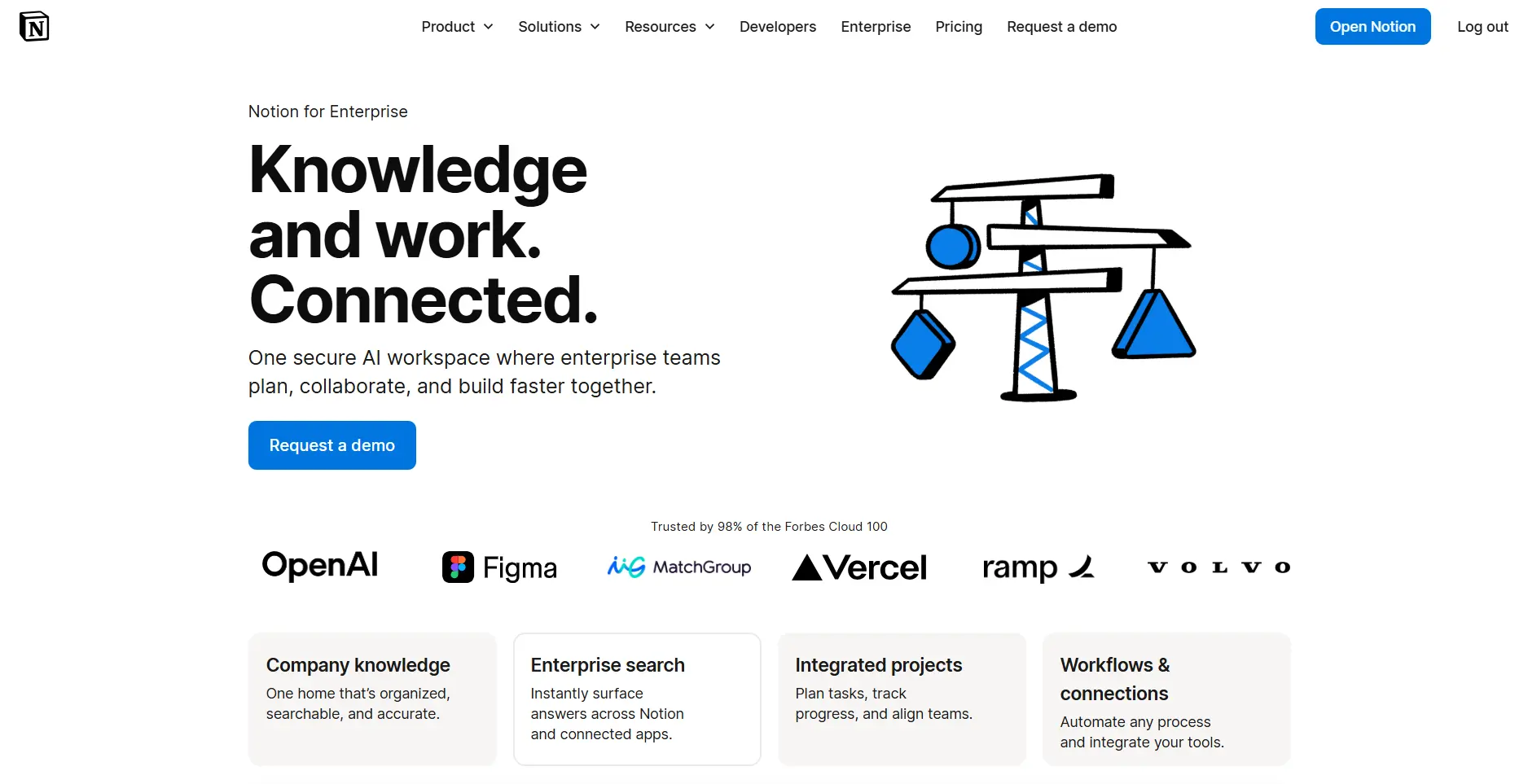
1. Notion B2B Enterprise page
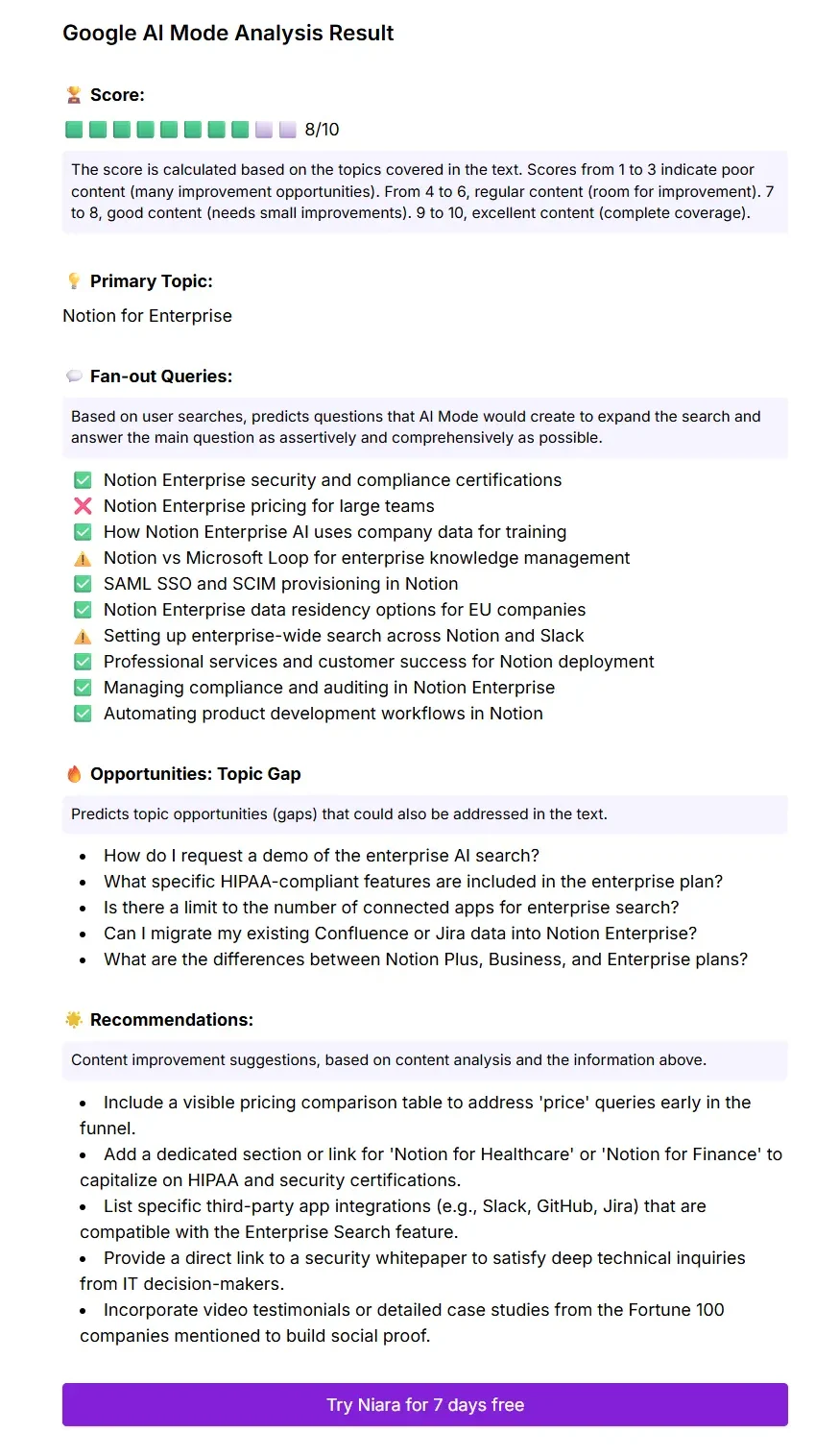
Niara’s Google AI Mode analysis gave the Notion B2B Enterprise landing page a solid 8/10, identifying it as high-quality content that effectively covers technical essentials like SAML SSO and compliance.
However, the diagnosis revealed critical “Topic Gaps” that could hinder conversions, such as the lack of clear plan comparisons and specific details on data migration from competitors like Confluence.
By identifying these hidden opportunities, Niara ensures your content doesn’t just inform, but actively answers the high-intent questions that enterprise decision-makers are searching for.
To bridge these gaps, Niara recommends strategic enhancements including a visible pricing table, dedicated industry-specific sections (like Healthcare and Finance), and direct access to security whitepapers.
2. Headspace App B2C page
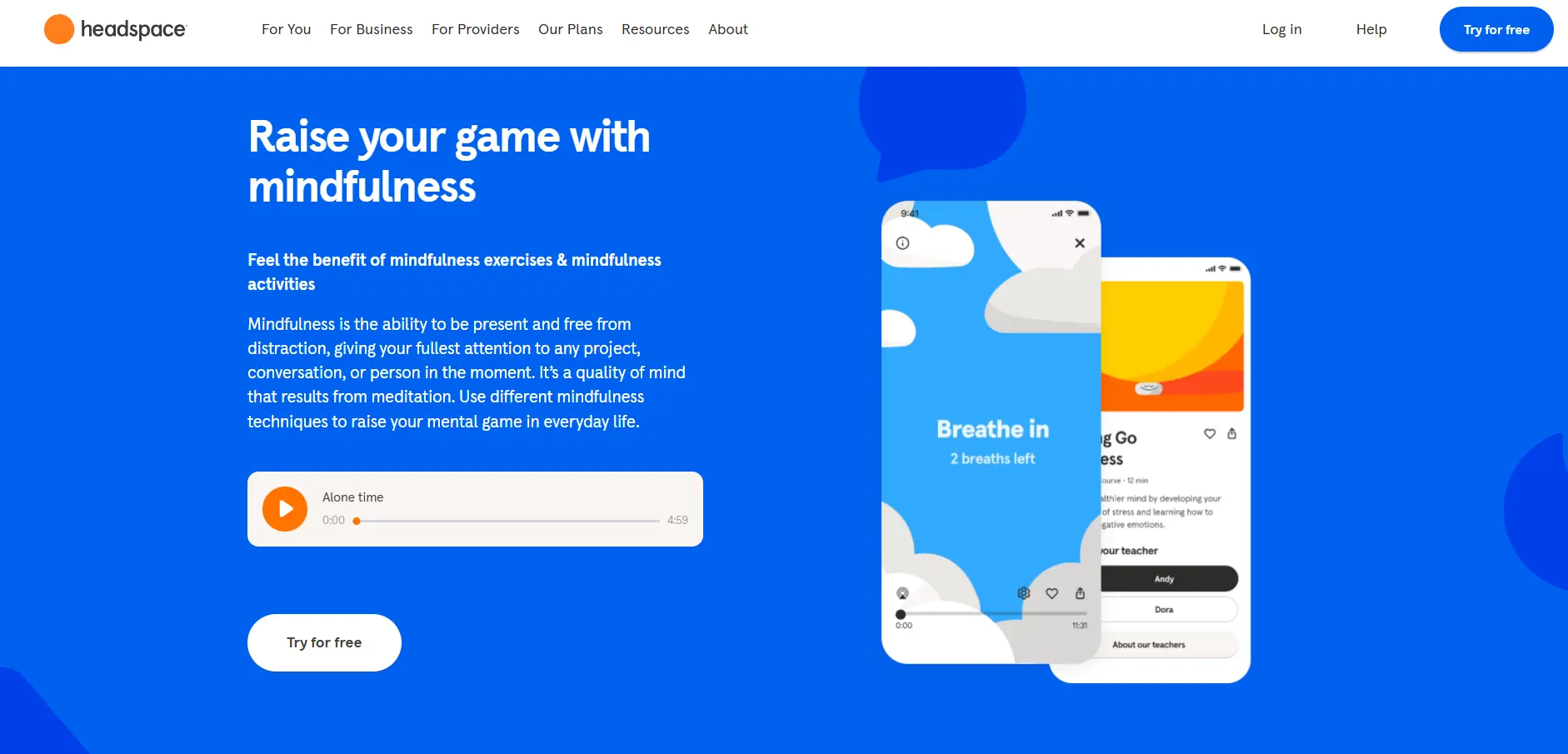
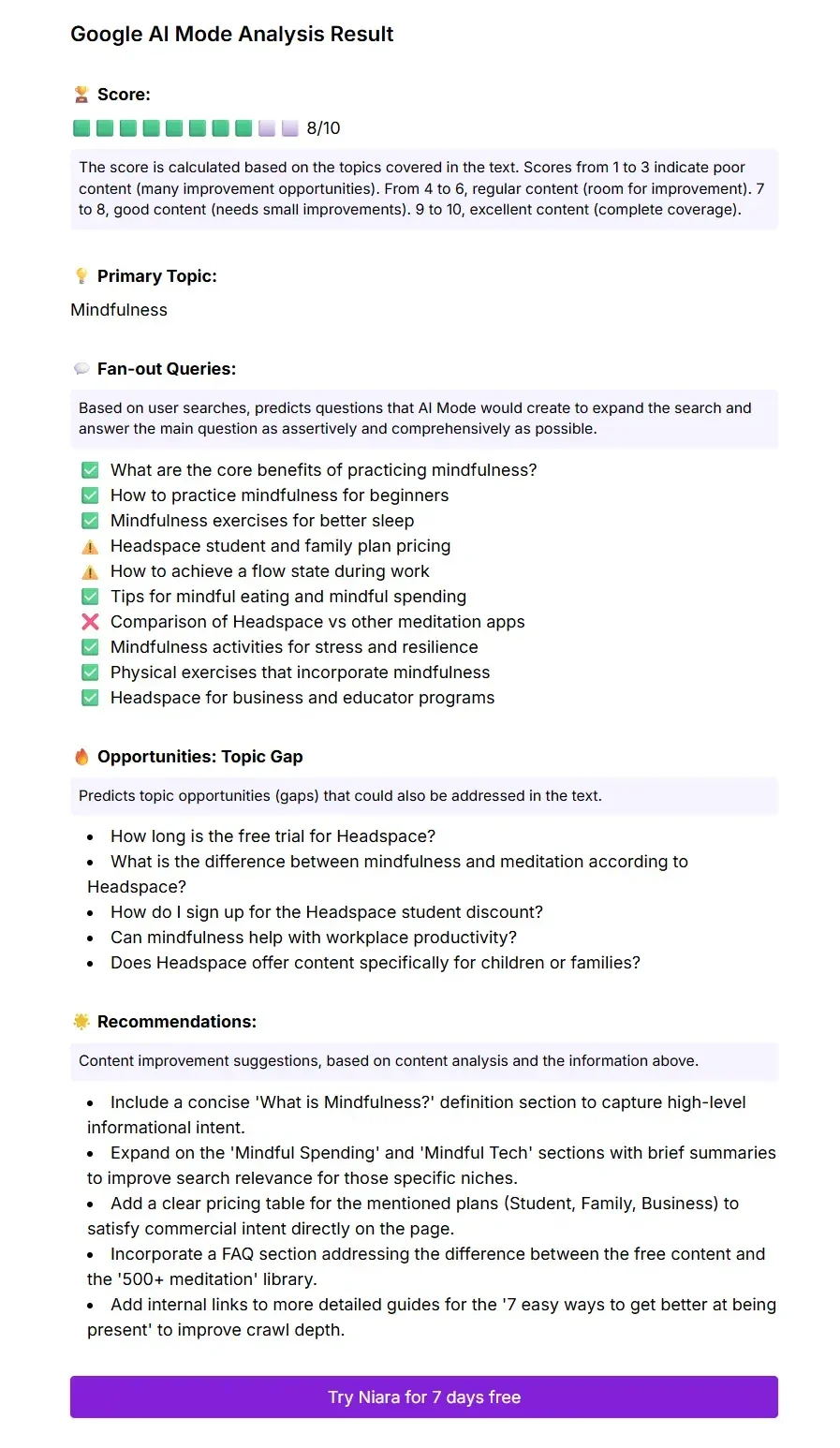
Niara’s Google AI Mode analysis clocked the Headspace mindfulness page at a solid 8/10. It’s doing a great job covering the basics and getting beginners started with exercises, but there’s a real opportunity here to turn “readers” into “subscribers.”
The diagnosis found some gaps, like clear details on student discounts and a simple explanation of how mindfulness actually differs from meditation.
To get that perfect 10, Niara suggests adding a quick FAQ to clear up the different subscription plans and a “Mindfulness 101” definition right at the top to catch those early-stage searches. Adding a clear pricing table for families and students would also keep people from jumping back to Google to find costs elsewhere.
Building a digital handshake that lasts
At the end of the day, a landing page is much more than just a mix of pixels and persuasive copy. But, in an era where search is becoming a conversation and users are more skeptical than ever, just being good doesn’t cut it anymore. You need a page that is truly understood by both your audience and the AI algorithms that now guide them.
The real secret to scaling your results is about choosing where to spend your energy. Niara can help you with that.
Whether you’re managing an enterprise giant or building your first solo project, the goal is the same: turning every single click into a real connection. The tools to dominate this new search landscape are ready for you. The only question left is: are you ready to stop guessing and start growing?
Want to see your page through the eyes of the Google AI?
Don’t leave your rankings to chance. You can use our Google AI Mode Insights for free right now to spot your content gaps before your competitors do.