
For years, digital marketing has been tethered to a legacy mindset of chasing high-volume keywords and traditional blue links. However, a fundamental shift in user behavior has rendered these conventional tactics increasingly obsolete. Today’s audience demands immediate, synthesized solutions.
This transformation has turned the search engine results page into a sophisticated, AI-driven answer engine.
Google leverages AI to summarize the web, satisfying user needs directly within its own interface. By providing comprehensive answers on-platform, the need for clicks to external websites is significantly reduced.
But it does not signal the death of SEO but marks a critical pivot in its core purpose. The discipline has shifted from a mere visit generator to a powerful engine for brand authority. Companies must now focus on dominating the trust funnel to establish credibility in an AI-led ecosystem.
Visibility today centers on becoming the primary source cited by generative AI models. If a brand isn’t recognized as a foundational solution, it effectively ceases to exist for the end user. You must prioritize high-quality, authoritative data to ensure your brand remains relevant in this new landscape.
Read on to discover how you can future-proof your brand’s visibility and master the complexities of generative search.
Read more: What is Google AI Mode? A Complete Guide for SEOs and Content Creators
The Anatomy of the Zero-Click Moment
To win, we must understand how we got here. The evolution from zero-click searches started around 2014 with the introduction of the Knowledge Graph and Featured Snippets. Google realized that for many queries, like “weather in London” or “who won best actress at the 2023 Oscars?”, the user wanted a direct answer.
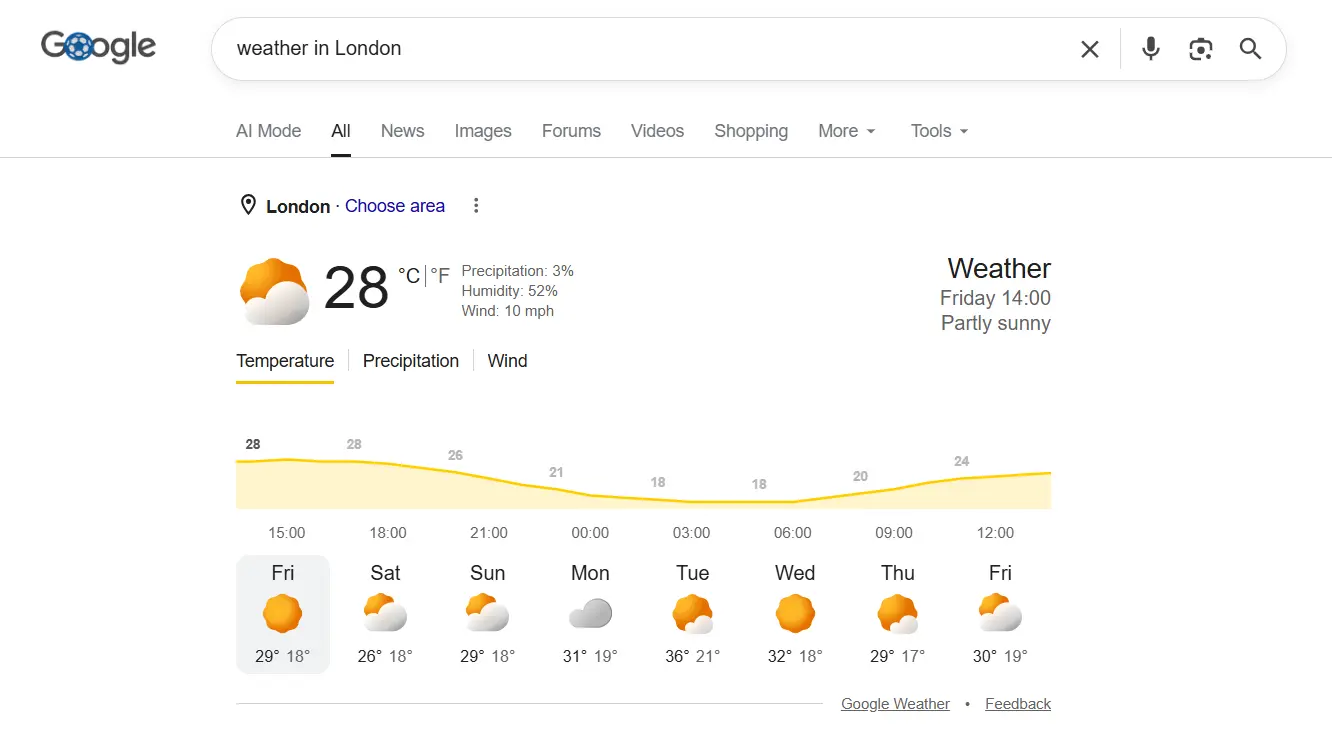
Year by year, the real estate on the Search Engine Results Page (SERP) has been reclaimed by Google’s own features. What started as simple definitions evolved into “People Also Ask” boxes, Local Packs, and interactive calculators.
Since 2024, the most significant leap is Generative AI.
AI Overviews synthesize information from multiple sources across the web to provide a comprehensive, conversational answer directly at the top of the page. Beyond mere scraping, this data represents synthesized intelligence. Content lacking the proper structure to integrate into this synthesis remains invisible to a large segment of your audience.
Zero-Click is the New Battleground
The core question every SEO professional is asking right now is: If the user doesn’t click, am I still doing SEO?
The answer is a resounding yes. Now, SEO is about Share of Search and Brand Visibility. Being the AI’s primary answer builds a trust funnel for future direct conversions.
When a user sees your brand cited as the definitive source for a complex problem, you’ve won the most valuable asset in digital marketing: authority.
Recent data from SparkToro and Similarweb confirms this shift, showing that 68.01% of U.S. Google searches ended without a click in early 2026. This surge is largely driven by the rise of AI Overviews, continuing a steady historical climb in zero-click behavior:
- 2019: ~50% zero-click rate
- 2020: 64.82%
- 2024: 58.5% (U.S.)
- 2026: 68.01%
While methodologies have evolved over the years, the trajectory is clear: as Google increasingly answers queries directly on the SERP, capturing visibility is the new benchmark for search success.
The Diverse Impact of Zero-Click Searches by Intent
While a lack of direct website traffic might seem like a disadvantage, the value of a zero-click result is heavily dependent on the user’s underlying search intent. In many cases, appearing in these prominent positions builds brand equity and drives offline conversions even without a traditional click-through.
- Local (Maps): users find your address or phone number directly on the search results page. They don’t click your site, but they walk through your door, representing a high-value offline conversion.
- Informational (Snippets): users get a quick definition or a specific “how-to” step. While they may not visit your page immediately, they remember your brand as the authoritative expert in that niche.
- Transactional (Shopping): while zero-click rates are generally lower here, AI-driven search features now compare products directly. Being included in these comparisons is often the only way to secure the eventual click and final sale.
Why Bother with SEO if No One is Clicking?
Let’s be real: the way we search isn’t a straight line anymore. It’s what we call the “messy middle“—that space where people spend a lot of time exploring and weighing their options before they ever hit a “buy” button.
If you stop investing in SEO because direct clicks are dipping, you’re essentially handing your market share to the competition.
Even without a click, being the source that powers a Google AI Overview or AI Mode response builds incredible brand authority. Think of it as digital billboards; the user might not click, but they see your name as the expert. This “mental real estate” is vital because:
- AI citations are the new rankings: if your site isn’t optimized, the AI won’t cite you, and you’ll disappear from the conversation entirely.
- The “delayed click” effect: a user might get a quick answer now without clicking, but when they’re ready to buy, they’ll search for your brand directly because you provided the best initial help.
- Defense: if you don’t occupy that Zero-Click space, your competitor will.
SEO is about building a legacy. You are teaching search engines and AI that you are the most trusted voice in the room.
The Strategic Framework AI + SEO
First of all, let’s move beyond the traditional keyword research strategy. Start with the business challenge.
1. Identify the Real Challenge
- Is your qualified traffic migrating to AI chats?
- Are models like ChatGPT, Gemini, or Perplexity citing your competitors instead of you?
You need to audit your AI Visibility. If you search for your core service in an AI tool and your brand isn’t mentioned, you have a citation gap.
2. Create a Strategy Document
Every modern SEO strategy must include an AI component. To be effective, this strategy must be grounded in the insights gathered from the AI visibility audit.
Without performing a comprehensive audit, brands remain blind to how generative search experiences are reshaping their organic landscape. The audit provides the data-driven foundation necessary to identify specific areas of erosion and opportunity.
For example, through the AI visibility audit, you might discover a significant shift in performance, like “We are seeing a 30% loss in informational market share for ‘how-to’ queries to generative AI.”
By identifying these specific losses, you can move beyond guesswork and develop a targeted response, whether that involves optimizing for AI-driven snapshots or pivoting toward high-intent, bottom-of-funnel content that AI cannot easily replicate.
SEO Best Practices to Dominate Zero-Click Searches Era
As search results increasingly satisfy queries directly on the page, mastering zero-click SEO is vital for securing brand visibility and authority through featured snippets. By delivering precise, high-value answers that the algorithm can instantly leverage, you position your brand as the definitive source in an evolving digital landscape. We’ll show you how to do it:
1. Optimizing for Entities and E-E-A-T
Think of Google less like a simple search engine and more like a librarian who knows everyone in town. Instead of just scanning for keywords, Google now focuses on entities.
An entity is essentially a well-defined “thing” or concept—whether that’s a person like Carol Helfstein or a brand like Niara.
But why does this matter for your SEO? It all comes down to trust.
Search engines naturally lean toward established brands because they’ve already proven their Experience, Expertise, Authoritativeness, and Trustworthiness (E-E-A-T). In the world of AI, the “cost” of being wrong is incredibly high. To avoid hallucinations or spreading misinformation, Google’s AI would much rather cite a brand it knows and trusts than take a gamble on a generic, anonymous site.
So, how do you make this work for you? You have to shift your strategy from keyword stuffing to entity optimization.
Instead of just chasing high-volume search terms, focus on building deep context around your topics. Your goal is to bridge the gap between your brand and your niche so that Google’s algorithm automatically associates your brand entity with the specific expertise you provide. When you stop being just a website and start becoming a recognized entity, the search engine starts to see you as a safe, authoritative bet.
Example
Imagine a micro-bakery called Crust & Crumb that specializes in ancient grain sourdough.
- The Keyword Approach (Old Way): you write a blog post titled “Best Sourdough Bread” and repeat the keyword 20 times. You might rank for a day, but Google doesn’t know who you are.
- The Entity & E-E-A-T Approach (New Way):
- Entity Connection: you link your website to your founder’s profile, who has a certification from a culinary institute (Expertise).
- Topical Authority: you create a “Sourdough Library” on your site, featuring articles on wild yeast fermentation, the mineral content of spelt flour, and the science of “oven spring.”
- The Result: Google no longer sees you as just a bakery website. It recognizes Crust & Crumb as an Entity inextricably linked to the Topic of Ancient Grain Sourdough.
Because you’ve built a web of context and proven your expertise, Google’s AI is much more likely to recommend your bakery as the authoritative answer for sourdough-related queries, trusting that you won’t provide “hallucinated” or low-quality information.
Niara Action: Simplify the work using Authority Map. This tool transforms your Search Console data into a strategic growth map. It identifies which clusters you already dominate and where the gaps are. By filling these gaps, you reinforce your position as the source of truth for that entire topic.
2. Predicting User Paths
AI models are predictive, mapping out a user’s entire search journey through a process known as query fan-out.
When a user asks a foundational question like “What is SEO?”, the AI recognizes this as a starting point rather than a destination. Through query fan-out, the system anticipates the logical expansion of that initial intent into multiple related paths, such as “How do I do SEO?” or “How much does SEO cost?”.
To rank effectively in an AI-driven search landscape, your content must do more than answer a single prompt. It must predict these secondary and tertiary needs, providing a comprehensive information architecture that satisfies the user’s next steps before they even navigate away. By addressing the full spectrum of the fan-out, you position your content as the ultimate authority for the entire topic cluster.
Example
A marketing agency targeting the query “What is SEO?” should not stop at a basic definition. To satisfy the query fan-out, the content must bridge the gap between education and conversion:
- The Foundation: define SEO and its importance for brand visibility.
- The Expansion: transition into “How to Build an SEO Strategy” to address the user’s next logical question.
- The Conversion: conclude with “The ROI of Hiring an Agency vs. In-House SEO” and a clear call-to-action for a free audit.
By mapping these secondary and tertiary needs, the agency captures the user at every stage positioning themselves as the comprehensive solution for the entire search journey.
Niara Action: Use ChatSEO to simulate the next questions of a serious buyer. Ask Niara: “Based on this article about [Topic], what are the next 5 questions a CMO would ask?” Then, incorporate those answers into your content. This anticipatory SEO ensures you stay in the user’s journey even if they don’t click the first link.
Read more: How to Create Non-Commodity Content and Stand Out
3. Writing Synthesizable Content
Once you have identified the topics required to become the leading authority in your niche and mapped out the essential elements for every page, you must master the art of high-quality writing.
“Synthesizable” means your content is easy for an AI to summarize without losing its meaning. This doesn’t mean being shallow. It means being structured.
Structured text organizes information logically to help both humans and AI bots parse data efficiently. Key elements include:
- Hierarchical Headings: using H1, H2, and H3 tags to establish a clear information architecture.
- Bulleted Lists: breaking down complex data into digestible, scannable chunks.
- Semantic Formatting: utilizing bold text for emphasis and descriptive labels for data.
To maximize both retention and search visibility, your content should leverage the U-Curve, a psychological phenomenon where both readers and AI algorithms prioritize the beginning and end of a piece.
Start with a high-impact opening that immediately delivers your primary keywords and core value propositions. Since search crawlers and users are most attentive at the onset, this is the critical moment to establish authority and ensure your main message is indexed and understood before attention spans naturally dip.
Example
To understand how to write for both AI and humans, compare these two ways of presenting information about “The Benefits of Sustainable Packaging”.
The Bad Example (Non-Synthesizable): “In the world today, there are many ways that companies try to be better for the planet, and one of those things is looking at how they wrap their products because plastic is a big problem. If you use things like cardboard or maybe stuff made from mushrooms, it really helps with your brand image because customers like to see that you care. Also, it’s worth mentioning that you might save money on shipping if the materials are lighter, which is a win-win for everyone involved in the supply chain from start to finish.”
- Why it fails: This is a wall of text. It lacks clear entities, uses filler words, and buries the key benefits in a rambling narrative, making it difficult for an AI to extract specific data points quickly.
The Good Example (Synthesizable): “Adopting sustainable packaging offers three primary advantages for modern e-commerce brands:
- Environmental Impact: Utilizing biodegradable materials like mushroom-based packaging reduces carbon footprints and plastic waste.
- Brand Loyalty: Eco-conscious consumers are 60% more likely to remain loyal to brands that prioritize sustainability.
- Cost Efficiency: Lightweight recycled materials often lower shipping costs by reducing total package weight.”
- Why it works: this version uses semantic formatting (bolding key terms) and a bulleted list to create a clear hierarchy. An AI can instantly synthesize this into a summary: Sustainable packaging improves environmental impact, boosts brand loyalty, and increases cost efficiency.
Niara Action: our Content Workflow empowers you to generate strategic briefings based on your top organic competitors. Then, you can transform it into fully optimized, high-ranking articles designed for both AI and human readers. The only remaining task for professionals is to review and refine the content for a perfect final touch.
4. Refreshing evergreen content and updates
Freshness is a major signal for zero-click features. If your “How to use AI in SEO” article is from 2022, it’s obsolete. Establish a cadence for updating cornerstone content. Even small updates to data points or adding a new “Pro Tip” can signal to Google that your content is the most relevant source for a current snippet.
Niara Action: After gathering new data and information, you can utilize the Google AI Mode Insights. Simply configure it with your URL, and Niara will provide a diagnostic based on official Google AI Overview and AI Mode documents. This analysis tells you exactly how to optimize your content—addressing query fan-out, identifying content gaps, and providing strategic recommendations—to significantly increase your visibility in AI-generated summaries.
5. Providing Explicit Semantic Context with Structured Data
AI models are sophisticated, but they prefer explicit data over implicit guesses. Structured Data is the bridge between your human-readable content and the machine-readable database.
You must implement schemas, such as FAQ, How-To, and Product data using JSON-LD. This tells the AI exactly what each piece of information represents. Without it, the AI has to “guess” your price or your steps. With it, you are providing a verified data point.
Example
Imagine a brand called Pawfect Bites that sells organic chicken jerky for dogs. Instead of hoping a search engine correctly identifies your price and customer satisfaction from the text on the page, you use JSON-LD Structured Data to provide clear, indisputable facts.
By adding the following code to your product page, you tell AI models exactly what they are looking at. This way, Google can display the $14.99 price and 4.9-star rating directly in search results, increasing your click-through rate (CTR).
When a user asks an AI, “What is the best-rated organic chicken treat under $20?”, your brand is much more likely to be cited because the AI doesn’t have to guess—it has the verified data point in its database.
Niara Action: Use the Structured Data Generator in Niara. Simply insert your URL, choose the type of data (Article, Product, Review), and Niara generates the error-free code. This provides the explicit semantic context AIs need to pull your product specs or FAQ answers into the zero-click features.
6. Expanding Beyond the Site
AI models are trained on the entire web, not just your blog. They look at forums like Reddit, YouTube transcripts, and social communities. If your brand isn’t being discussed where your audience talks, the AI won’t have the “social proof” to cite you.
However, you don’t need to shout into every corner of the internet. You just need to show up where your specific audience actually hangs out. By focusing your presence on the platforms that matter most to your community, you can build authentic connections and open the door to high-quality conversion opportunities.
Niara Action: if you’re thinking about expanding your reach but aren’t sure where to start, Niara is here to help. You can use ChatSEO with real-time web search to ask specific questions about your brand’s current footprint and identify exactly where your target users are most active.
Once you’ve found your hotspots, take advantage of our ready-to-use prompts for platforms like Instagram and YouTube. These prompts are designed to help you create high-impact social content or even repurpose your existing social media videos and posts into SEO-friendly articles for your website.
Read more: Multimodal SEO: Learn How to Make Your Brand the Best Answer in Any Digital Format
Content Structure Strategies for Machines and Humans
The way we write must satisfy two audiences: the AI that reads to summarize and the human who reads to solve a problem. To bridge the gap between these two worlds, we have outlined a series of textual guidelines below.
The 40-50 Word Rule
The 40-50 word rule is an SEO strategy designed to capture Google’s Featured Snippet. It involves writing a concise, direct answer of approximately 40 to 50 words immediately after a question-based heading.
This specific length is the “sweet spot” for search engine algorithms. When a user asks a question, Google looks for a block of text that provides a complete answer without unnecessary fluff.
Just ensure your response is factual, concise, and structured as a single paragraph.
Balance Answers and Value
This is the psychological trick to getting clicks in a zero-click world. You provide the direct answer (the “What”) to satisfy the AI and the user’s immediate need, but you offer the How, the “Case Study”, or the “Tool” (the deep value) only on your site.
- Example: “The average ROI for SEO is 5x (Direct Answer). However, our proprietary study of 500 companies found 3 specific factors that can double that—see the full data here (Value Add).”
It works because AI provides the facts, but your site provides the context. By withholding proprietary data or specific strategies, you force a click-through for users seeking real value.
In addition, sharing unique research or first-hand case studies proves your Experience and Expertise, making you the authoritative source.
The 30% Rule and the Inverted Pyramid
Apply the Inverted Pyramid style of journalism.
- The Lead: answer the core question in the first paragraph.
- The 30% Rule: ensure the most critical 30% of your value is delivered in the first 30% of the page.
- The 47-Second Test: can a user (or an AI) grasp the central idea in less than a minute? If not, your content is too “fluffy.” Eliminate generic intros like “In today’s fast-paced digital world…” and get straight to the point.
Assets AI Cannot Replicate
Some content is “immune” to being fully synthesized by AI. This is where you should focus your human energy:
- Emotional Depth: personal stories of failure and success.
- Human Interaction: interviews and quotes from experts.
- Controversial Opinions: AI is programmed to be neutral. Taking a data-backed stand on a industry trend makes your content unique.
- Proprietary Data: if you own the data, the AI must cite you as the source.
Precision Over Generics
For e-commerce and complex B2B decisions, avoid vague claims. Instead of saying “Our software is fast”, say “Our software reduces server response time by 40% compared to the industry average”.
This precision feeds Google’s query fan-out, where the AI looks for specific attributes to help users narrow down their search.
- Highlight the “Why”: detail specific use cases. Why does your product work better for a “Solo” user vs. an “Enterprise” user? This specificity makes you the “source of truth” for niche queries.
Read more: Grounding Indexing: A Practical Guide to Verifiable AI Outputs
Proof of Success and Measurement
In the zero-click era, traffic is vanity; audience is equity. Success is no longer measured solely by clicks, but by your brand’s authority within the AI-driven search landscape. To thrive, businesses must transition from traditional traffic tracking to a measurement dashboard focused on visibility and influence.
Key performance indicators for the AI era include Share of Voice, which measures your ownership of SERP real estate like Featured Snippets and People Also Ask blocks. Additionally, monitoring Brand Sentiment ensures AI models associate your brand with positive attributes like “innovation” or “leadership.”
To validate your zero-click strategy, monitor these essential metrics:
- Impressions: this tracks how many users consumed your content directly on the SERP.
- Average Position: this metric helps professionals understand how the brand is performing in organic results.
- Brand Searches: an increase in direct searches for your brand proves your top-of-funnel strategy is working.
- Semantic Coverage: measures how many topical entities your site is authority for.
Targeting high-value engagement metrics ensures that your scaling efforts result in conversion-ready audiences rather than vanity traffic.
Niara Action: the days of drowning in Excel sheets are over. With Niara’s Search Analytics, you can use Conversational Analytics to “talk” to your data. Instead of filtering rows, simply ask the ChatSEO: “Which of my pages have the highest impressions but a CTR below 1%?”. This allows you to find pages that are gaining massive brand visibility despite low clicks—the hallmark of zero-click success.
Why AI Will Always Depend on Human Insight
It’s worth emphasizing that human oversight remains indispensable across every stage of research, production, and analysis. There is a growing fear that AI will eventually render human contributors obsolete, but this stems from a fundamental misunderstanding of how Large Language Models (LLMs) function.
AI is an aggregator, not a creator. It lacks the capability to conduct original interviews with a CEO, spearhead a new scientific experiment, or truly empathize with a customer’s unique pain points.
Furthermore, AI faces the risk of “Model Collapse” if it is trained solely on other AI-generated content. To remain accurate and relevant, these models require a continuous stream of fresh, data-backed, and opinionated human perspectives.
By leveraging tools like Niara, you are automating the operational tasks—the HTML, the Schema, and basic keyword clustering. With the heavy lifting handled, you are free to focus entirely on the strategy.
Read more: Why We Focus on Creation, Not AI Detection
Elevate Your Brand Strategy with Niara
The zero-click era is an invitation to become a true authority. The new SEO is about earning a user’s trust before they ever reach your site.
To win in this landscape, you must be faster, more technical, and more strategic. This is why we built Niara. We want to simplify the complex requirements so you can focus on building a brand that AI wants to talk about.
Use Niara to automate the technical “skeleton,” but ensure the “soul” of your content—the evidence, the unique brand voice, and the genuine problem-solving—is deeply human.
Ready to dominate the AI search funnel? Start your free trial with us. Let’s stop chasing clicks and start building authority.