
Google’s recent updates make one thing clear: if your content sounds like a summary of the top five search results, it has no future. We are seeing a flood of commodity content, articles that meet the word count but provide zero new insight. When everyone says the same thing, Google has no reason to rank you, and AI models have no reason to cite you.
Winning in this environment requires information gain. This is the measurable difference between what everyone else knows and the specific expertise your brand brings to the table.
This guide shows you how to find those knowledge gaps. We’ll walk through a workflow to audit your pages, identify where you’re just repeating the consensus, and turn your content into a unique asset that competitors can’t replicate.
Also read: From commodity to non-commodity: how to sscape the “more of the same” and build authority
What is information gain in SEO?
Think of information gain as a diversity filter for search results. When Google looks at a specific topic, it doesn’t want to show ten versions of the same article. It looks for the delta — the specific facts, data, or opinions on your page that don’t exist anywhere else in that search cluster.
This concept isn’t a content theory. It’s backed by Google Patent US11354342B2. The system estimates a user’s knowledge state after they read a page. If a reader visits three different sites and the third site tells them something they haven’t seen yet, that site earns a high information gain score.
Google uses this to stop knowledge fatigue. By rewarding pages with high information density, the algorithm forces publishers to bring actual value to the index instead of just filling space.
If your content offers a fresh data point or a unique way of solving a problem, you provide high information gain.
If you just rewrite the top three results, your score is zero, and Google has no reason to prioritize your link over other sources. In the eyes of the algorithm, your site becomes redundant, and you’ll likely be skipped in favor of the original source.
How information gain defines Google’s generative AI standard
In generative AI era, information gain is the only mechanism that “forces” an AI to cite your website as a source. Google provides a specific guide about AI optimization, that offers clues on how to build content that adds real value to the user journey instead of just echoing the consensus.
Non-generic utility
Non-generic utility requires moving away from common knowledge toward expert insights. If your article explains “What is SEO”, you are competing with a machine that explains it faster. Instead of writing for search volume, write for the complex reality of the work.
See the difference:
| Generic content | High information gain |
|---|---|
| To improve your SEO, you should focus on keyword research, high-quality content, and building backlinks from authoritative sites in your niche. | We analyzed 500 product pages and found that adding a usage context section (not just keywords) reduced bounce rates by 22% and earned AI citations in 4 out of 10 searches. |
The second version uses a specific, measurable outcome that an AI cannot guess. It forces the search engine to treat your site as a unique source of truth.
Exclusive point of view
An exclusive point of view uses first-hand experience to create a narrative that machines cannot replicate. Generative models summarize existing text, but they do not experience reality. Documenting your specific journey creates a content moat around your brand that proves to Google that your insights come from a human interacting with the real world.
At Niara, we practice this by sharing real stories from our own team. We recently published a piece detailing the transition from writing 6 to 500 product descriptions per day. The piece dives deep into what I went through, the copywriter burnout, chronicling the mental toll of manually producing machine-level output before modern tools arrived.
A generic AI can explain “how to write for e-commerce”. However, it don’t know and cannot describe the brain shutdown that happens after the tenth variation of a sofa description. This lived detail is the delta that provides true information gain. It transforms a simple tutorial into a strategic asset that no competitor can copy. So:
- Don’t: publish a generic article on “The benefits of AI for copywriters”
- Do: share a personal experience (positive or negative) like we did at Niara. Relate your past manual struggles to your current strategy to show real-world evolution.
Human-centric organization
Human-centric organization means the structure of your page must serve real people first. Google’s guidelines emphasize that content should be easy to follow and supported by media that AI cannot easily summarize into plain text.
If a user can get the full value of your page by reading a 2-sentence AI summary, you’ve lost the click. You must organize your insights so the user needs to visit your page to get the full benefit.
For example, thinking about a B2C home workout brand:
- Generic: a text list of “10 best exercises for small apartments”. AI can summarize this easily.
- Human-centric: an interactive routine builder with original videos showing form corrections for tight spaces.
This approach follows Google’s advice to “focus on what your visitors would enjoy” while simultaneously safeguarding your traffic against zero-click searches.
How to perform an information gain audit step-by-step with Niara’s AI tools
Theory only gets you so far. The real challenge is identifying exactly where your content overlaps with everyone else’s. By using Niara’s specialized SEO agents, you can automate the tedious process of competitor mapping and focus your energy on the creative delta that earns rankings and citations.
1. Identify the consensus layer
To build unique content, you must first map the consensus layer, the baseline facts and definitions that every top-ranking page shares. For example, if you write about technical SEO, every top result will define canonical tags and XML sitemaps. If your strategy is to simply rewrite these definitions, your page becomes invisible to AI Overviews. You must identify this baseline to know exactly where to stop summarizing and start adding unique value.
Instead of manually reading every competitor, you can use Niara’s ChatSEO to automate this audit. Unlike generic AI tools that rely on static training data, Niara uses a live web search to pull current information from the SERP.
- Open ChatSEO and activate the Web Search feature.
- Paste the URLs of the top three competitors for your target keyword.
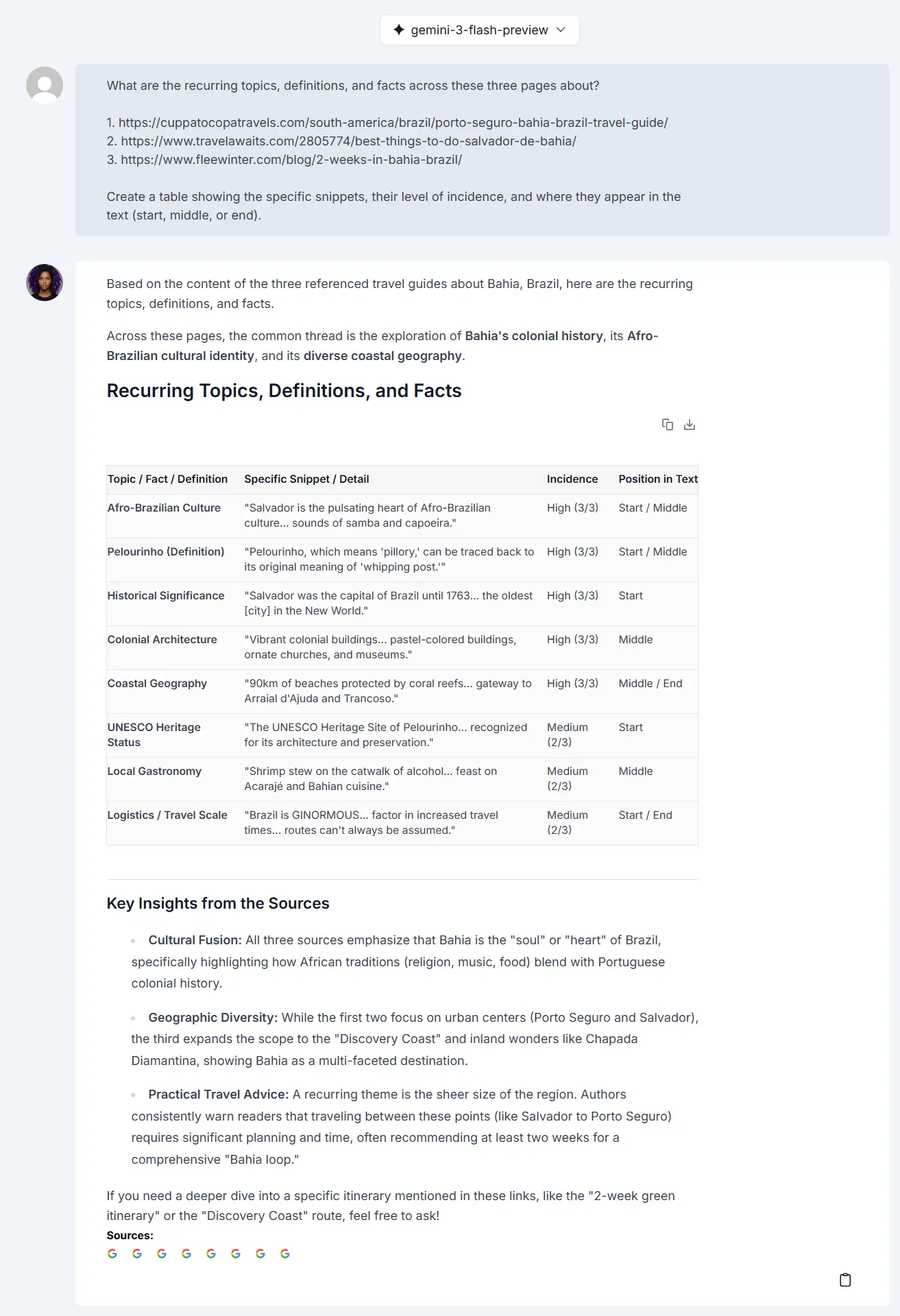
- Use a prompt like: “What are the recurring topics, definitions, and facts across these three pages? Create a table showing the specific snippets, their level of incidence, and where they appear in the text (start, middle, or end).”
This visualization helps you find the right balance for your article. It shows you the must-have information that users expect to see before you move to the next phase: finding the content gaps that will earn you an AI citation.
2. Find the content gaps
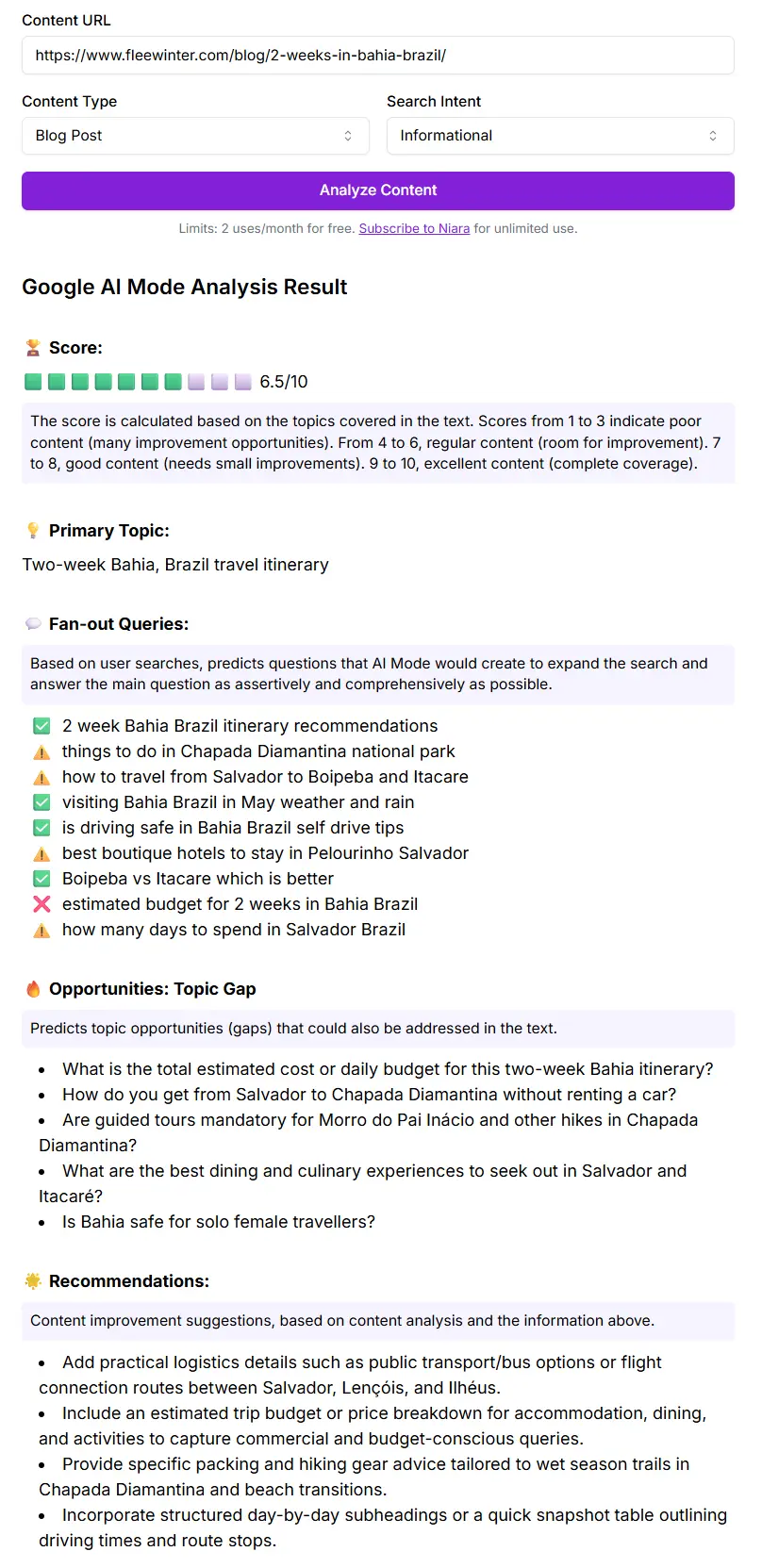
When we talk about being cited in AI assistents, one of the most important aspects is finding the gaps and next questions a user will ask after reading your main content. These are fan-out queries: you fill the silence by addressing topics that are complex, hard to research, or ignored by competitors because they lack high search volume.
Instead of just defining a topic, you explore the specific challenges or overlooked edge cases that frustrate users who find common content too superficial.
With Niara, you can use the same ChatSEO session to find these gaps. Ask the chat to identify relevant questions or subtopics that none of your competitors addressed. This helps you find the missing pieces that your audience cares about but can’t find elsewhere.
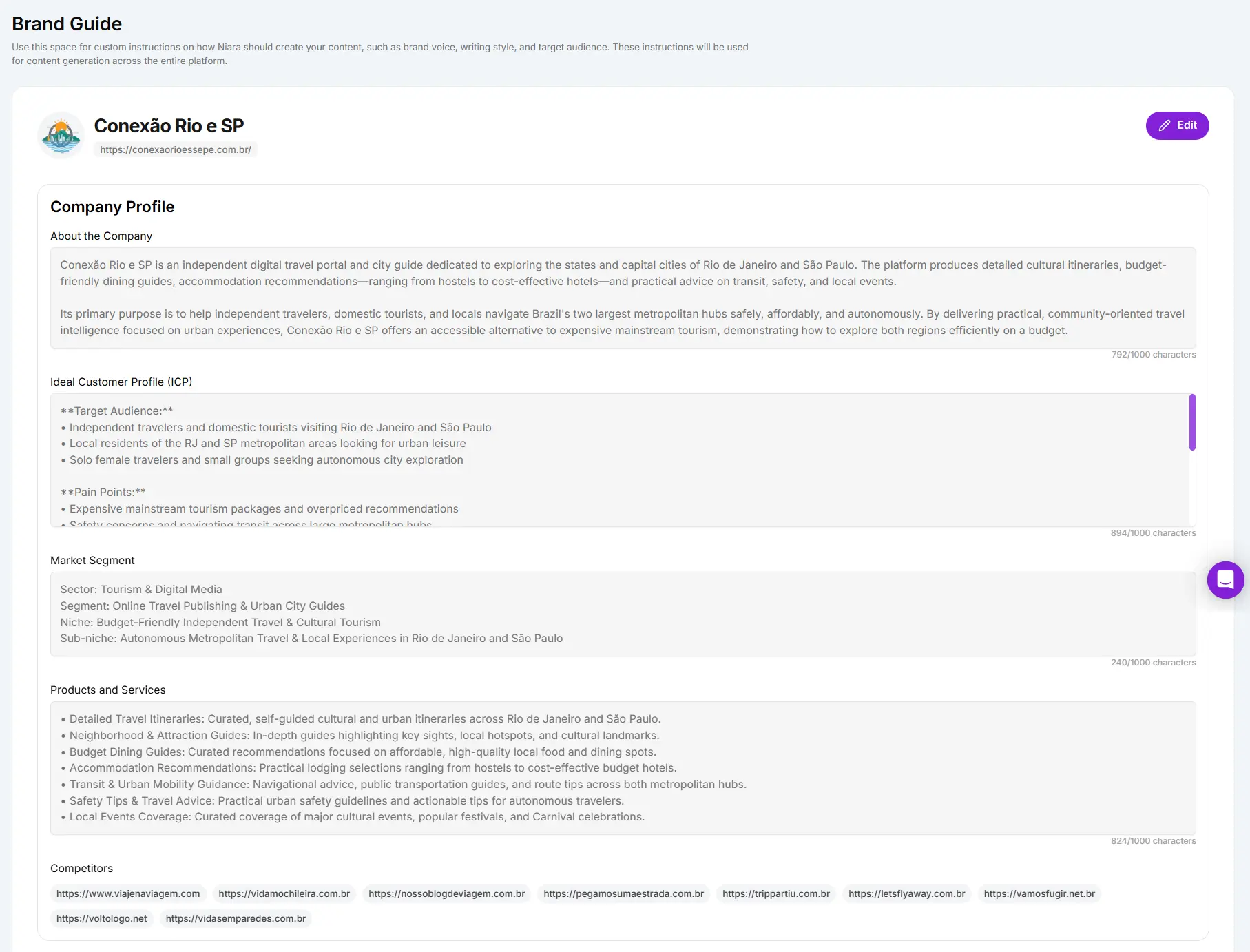
To make this process faster, Niara includes a Brand Guide. You set your company information, target audience, and tone once (or let the AI generate it by scanning all your online references) and Niara applies that context to every search and generation. You don’t have to repeat who you are or who you’re writing for every time you start a new analysis.
For a deeper look into AI-specific opportunities, you can use Google AI Mode Insights. This tool analyzes competitors to find query fan-out opportunities and specific recommendations. It highlights the exact gaps you can fill to increase your visibility in generative search results.
3. Inject proprietary value
This phase focuses on the experience factor. You must add first-hand data, internal case studies, or even negative results detailing what did not work. For example, if you tried a specific link-building tactic and it failed, that failure is highly valuable proprietary data that no one else can claim.
In the AI era, to ensure search engines parse this correctly, apply the chunking method: organize your headings and paragraphs so that AI can easily extract your unique insights as standalone units. Each section should state the problem, present your unique data, and offer the solution clearly.
To satisfy the exclusive point of view requirement and increase the density of your chunks, integrate User Generated Content (UGC) from platforms like Reddit or specialized industry forums. Analyzing the raw, unfiltered questions and complaints users post provides a direct line to the friction points ignored by the consensus layer.
When you structure a chunk around solving a highly specific, real-world problem sourced from UGC, you create a highly relevant, deeply specific knowledge unit that RAG systems prioritize over generic definitions.
Also read: Google spam updates in 2026: what they mean for your business and how to adapt to the AI era
4. Ensure your website isn’t blocking AI crawlers
A critical component of an information gain SEO checklist involves how you handle AI crawlers like GPTBot, CCBot, and Google-Extended. If you want to survive the generative search era, know that blocking these bots is a missed opportunity for citations.
If these crawlers cannot read your unique insights, they cannot cite you in their AI Overviews or chat interfaces. You actively lose the chance for citations. Unless you have strict enterprise data privacy constraints (such as Zero Data Retention policies for internal user data), allow these bots to crawl your public-facing, high-information-gain content to ensure you become a cited source in their outputs.
How we built this article considering information gain strategy and Niara’s tools
To show you how this works in practice, we applied the exact same information gain strategy to build the guide you are reading right now. We used Niara’s ecosystem to move from a basic idea to a high-value article that stands out. Here is the step-by-step process we used:
1. Competitor mapping with ChatSEO
We started by using ChatSEO to scan the top-performing pages in organic and generative results. We wanted to see how other sites were explaining information gain. Our goal was to find the consensus layer first.
2. Spotting the AI-era gap
During our analysis, we noticed a pattern: most competitors talked about information gain as a general SEO concept, but ignored its role in the age of AI search. Since Niara is an AI-first platform, we found out that we could focus the article on how to use AI responsibly to speed up the information gain process, rather than just explaining the theory. That’s our covered gap!
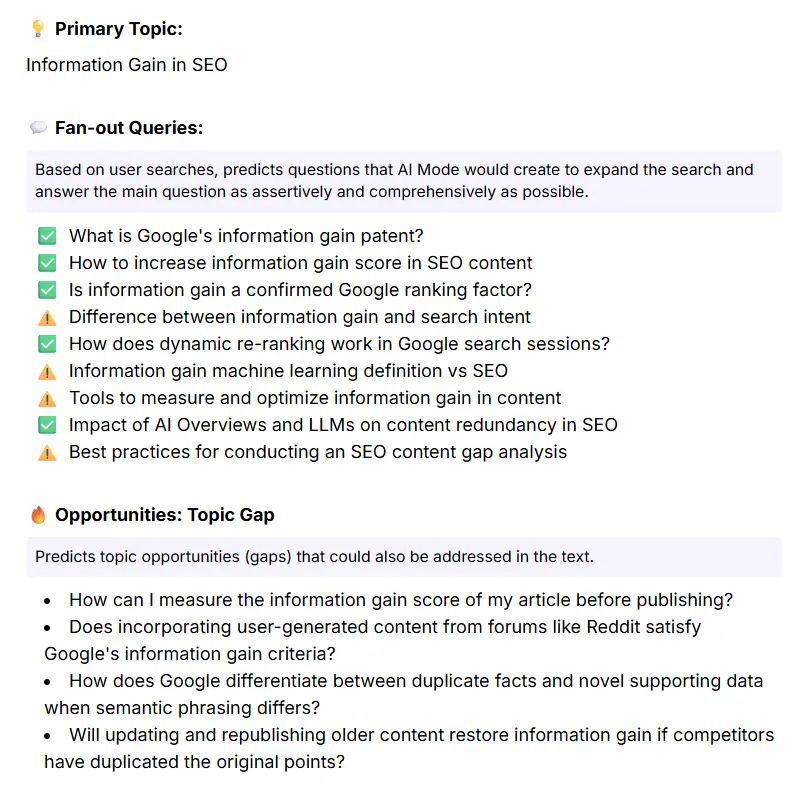
3. Finding fan-out queries with Google AI Mode Insights
Next, we used Google AI Mode Insights to find the specific themes and questions competitors missed. This tool helped us identify the follow-up questions users have that the current search results weren’t answering. This ensured our content would be relevant to our audience’s actual needs.
4. Building the briefing with Content Workflow and generating the AI-assisted draft
We ran our Content Workflow tool to analyze first-page performance and find remaining content gaps. By combining these findings with our data from ChatSEO and AI Mode Insights, we created a comprehensive briefing that prioritized unique value over common knowledge.
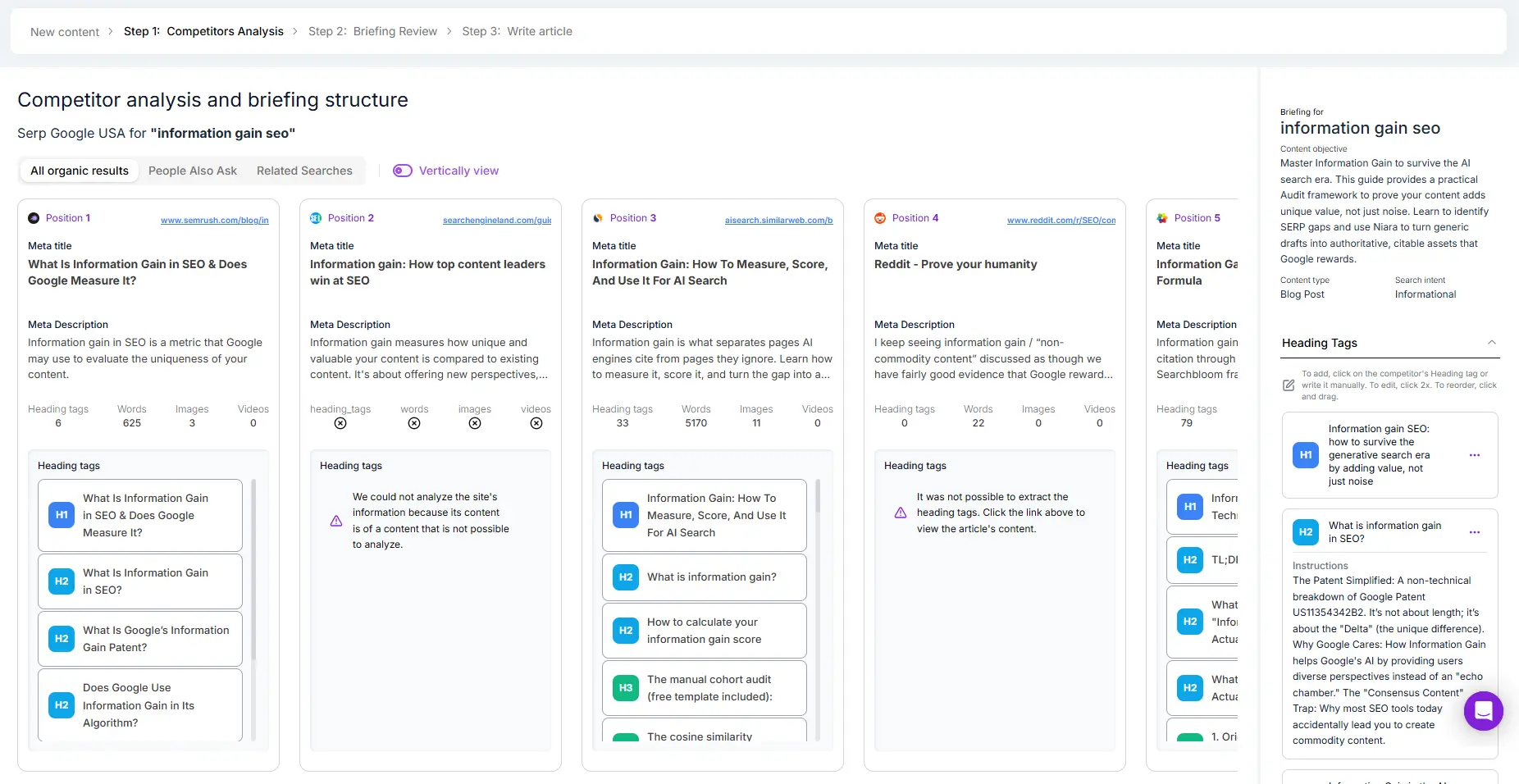
We also used the Content Workflow to generate a first draft. Because this tool is trained on SEO best practices and Google’s official AI documentation, the initial text already followed the structural rules search engines look for.
6. Adding the human perspective
Finally, we edited the entire piece to include our own insights, perspectives and multimodal elements to emphasize what is being explained. This final step is what turns a good draft into a high-quality asset, making the content truly different from anything else on the web.
How to measure information gain: follow this framework
Use this table to audit your current drafts. If you answer “Yes” to the first two tests, your content is at risk of being ignored by both Google and AI Mode.
| Test | The question | The red flag (low gain) | The green light (high gain) |
|---|---|---|---|
| The copy-paste test | If you swapped your brand name with a competitor’s, would the advice still feel accurate? | Yes. The content is generic, using industry fluff and consensus facts that everyone already knows. | No. The content contains specific opinions, unique methodologies, or data that only your brand possesses. |
| The gap test | After reading the top 3 results on Google, does your article answer a question that they missed? | No. You are simply summarizing what is already on Page 1, perhaps just making it longer or adding more bullet points. | Yes. You’ve identified a specific pain point that others skipped. |
| The deletion test | If your page vanished from the internet tomorrow, would the industry lose a specific piece of information? | No. The information is commodity content. Users could find the exact same value on 50 other websites. | Yes. You are a source! You’ve provided a unique case study, a contrarian take, or a proprietary framework. |
Remember: be the source not the echo
As AI-generated text becomes the baseline, search engines are evolving to filter out the noise, prioritizing unique data, cross-domain synthesis, and exclusive points of view. The only way to win and maintain visibility is to provide insights that machine learning models cannot invent on their own.
Stop summarizing your competitors and start auditing your content for true utility and citable assets.
Start your first information gain audit with Niara today and transform your strategy from echoing the consensus to being the definitive source.
